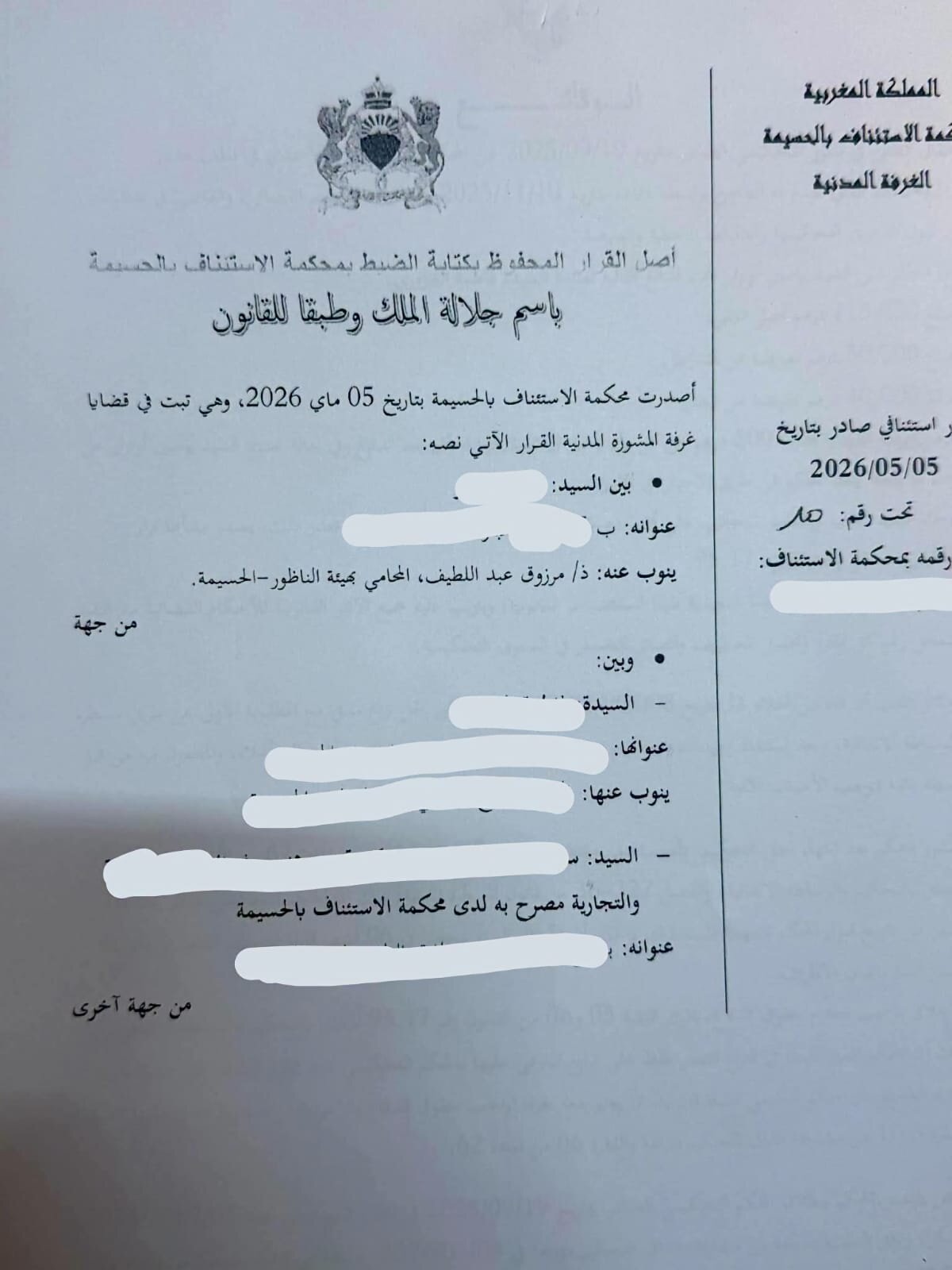
In a decision of 5 May 2026, the Al Hoceima Court of Appeal (civil chamber in council) annulled an arbitral award rendered after the arbitration time limit had expired. The decision is a reminder that the time limit is not a formality and that any extension must be established by the parties’ will.
Facts
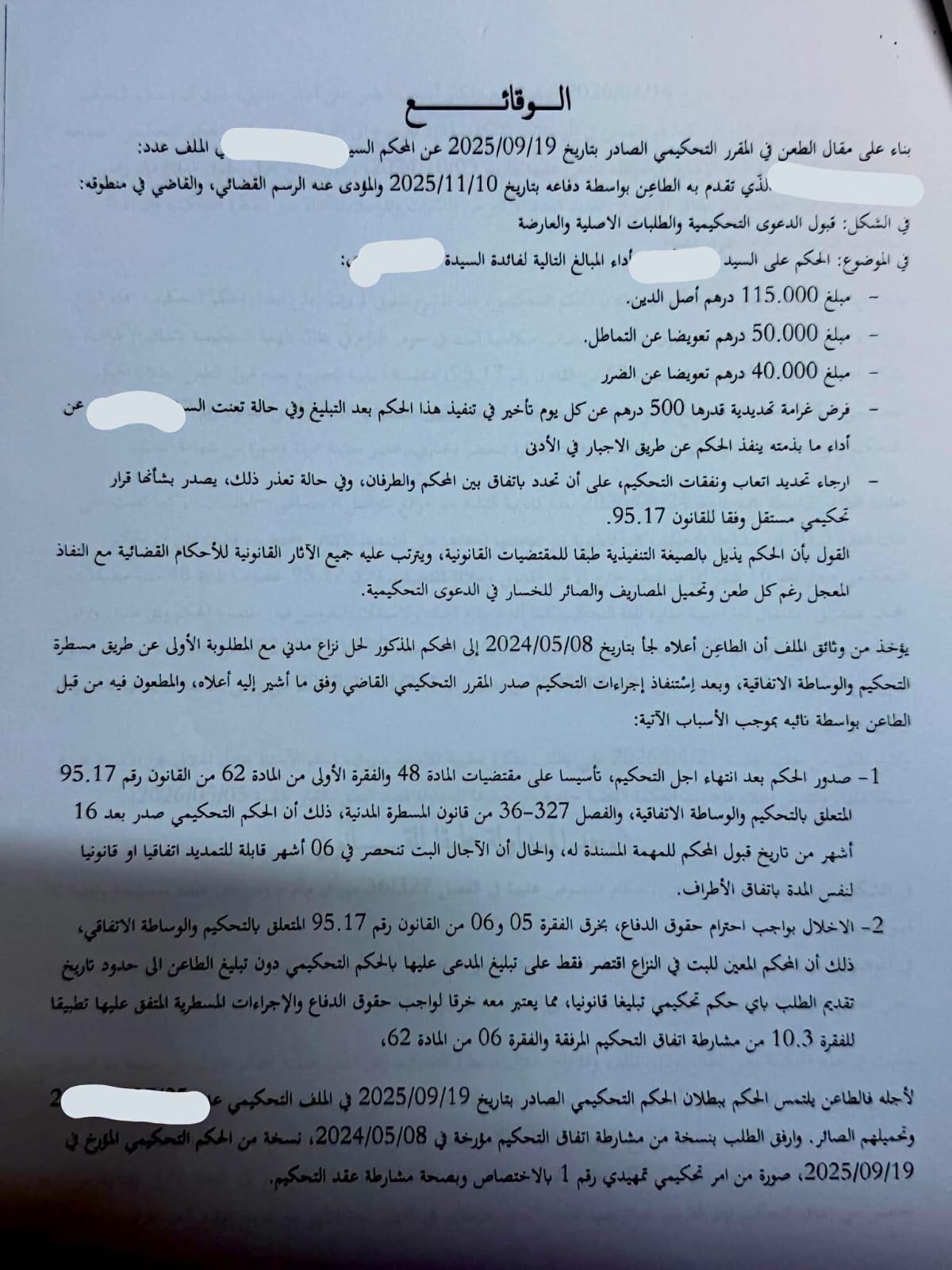
- Arbitration agreement of 8 May 2024; clause 5 set a period of six months from the last signature, extendable once for the same period at most.
- Award rendered on 19 September 2025, more than 16 months later, ordering payment of MAD 115,000 principal, MAD 50,000 for delay and MAD 40,000 damages, with a daily penalty of MAD 500.
- Action for annulment filed on 10 November 2025.
Arguments
- Applicant: award rendered after the time limit (Arts. 48 and 62(1) of Law 95.17; Art. 327-36 Code of Civil Procedure); breach of the rights of defence, notification via WhatsApp contrary to the agreement, use of a foreign language and lack of impartiality.
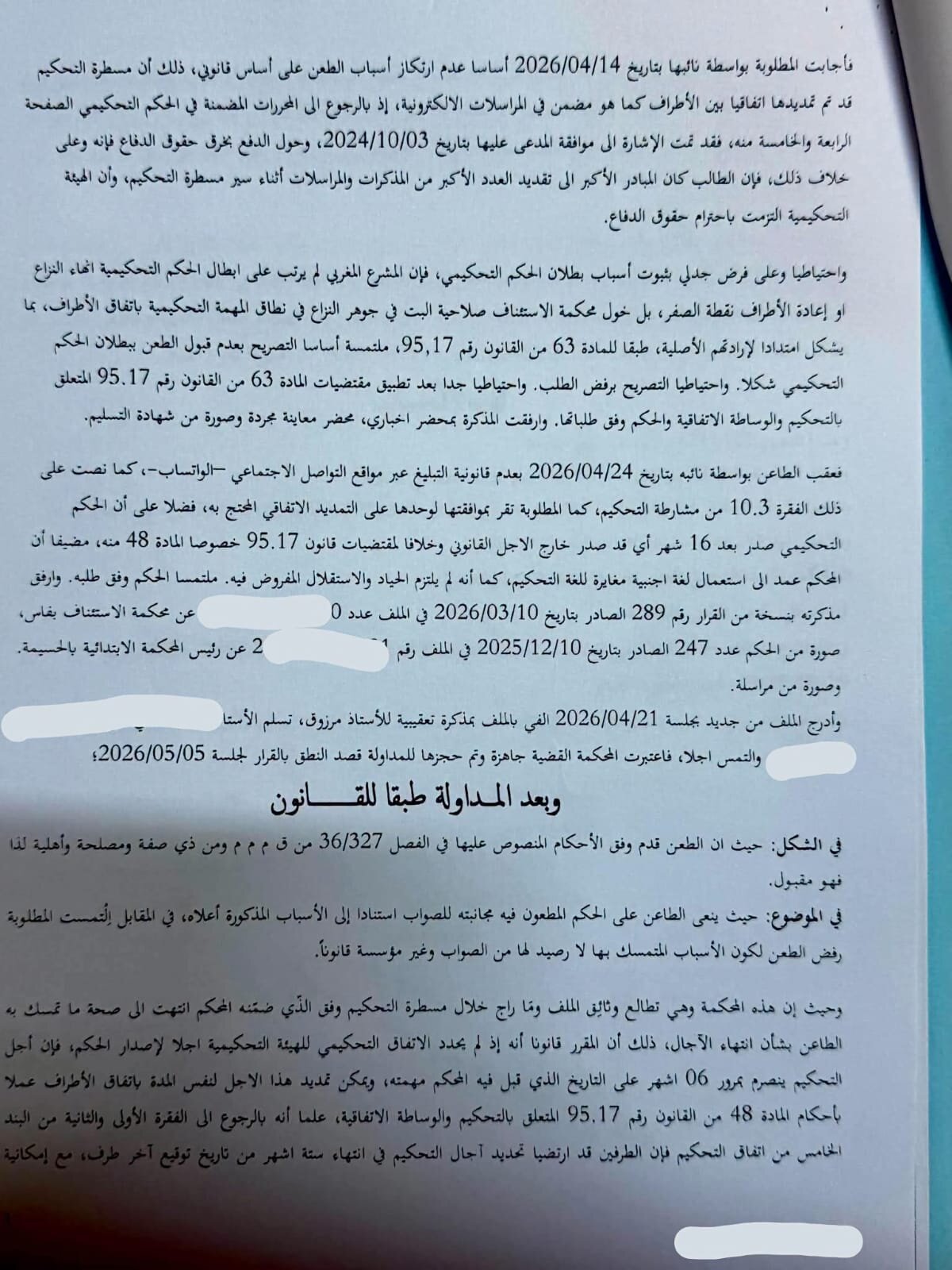
- Respondent: extension agreed by electronic correspondence (consent of 3 October 2024); defence rights respected; alternatively, asked the Court to rule on the merits under Article 63.
Holding
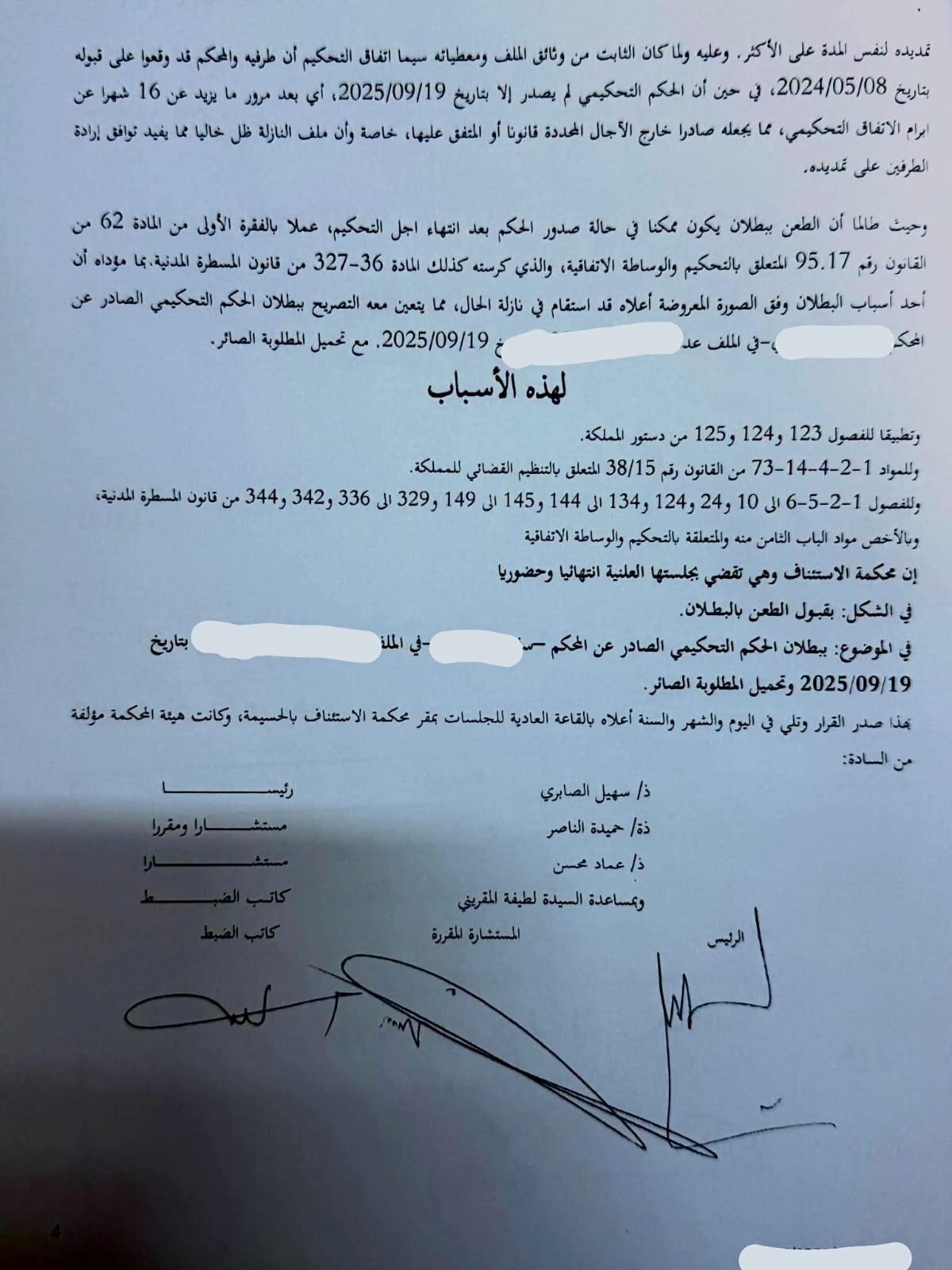
The Court found the action admissible and upheld the first ground: absent an agreed period, the mandate ends six months after acceptance, extendable for the same period by agreement (Art. 48). The parties had agreed on six months, extendable once; the award came more than 16 months later with no evidence of an agreed extension. The Court annulled the award of 19 September 2025 and ordered the respondent to bear the costs.
Commentary
- The time limit bounds the arbitrator’s mandate: an award rendered out of time comes from an arbitrator whose mission has ended — the first ground of annulment under Article 62.
- A twelve-month ceiling: with a single extension, the mandate could not exceed twelve months; at 16 months the award exceeded it even if the extension were proven.
- Proof of extension: a mention of consent in the award itself is not enough; the extension must be evidenced by a clear written record in the file.
- Annulment without ruling on the merits: the Court did not rule on the merits despite the request under Article 63, raising the question of its powers when annulment results from the expiry of the mandate itself.
Practical lessons
- Set the time limit and its starting point precisely.
- Record any extension in writing before the current period expires.
- Respect the agreed extension ceiling.
- Arbitrators should monitor deadlines and seek extensions in time.
- Specify accepted means of notification in the agreement.
The copy is published with the parties’ personal data redacted. Commentary prepared by the Centre for academic purposes.
Copy of the decision