

Redefining Liability in the Age of Autonomous Vehicles: From Human Errors to Machine Accountability – Zineb Ziat – Dr Bouchta Aloui
Redefining Liability in the Age of Autonomous Vehicles: From Human Errors to Machine Accountability
إعادة تعريف المسؤولية القانونية في عصر المركبات ذاتية القيادة: من الخطأ البشري إلى مسؤولية الآلة
Rs : Zineb Ziat
PhD Student in Business Law
Laboratory ESSOR: Law, Philosophy and Society Faculty of Legal, Economic and Social Sciences
Sidi Mohamed Ben Abdellah University – Fez, Morocco
Dr : Bouchta Aloui
Accredited Associate Professor
Doctor of Business Law
Laboratory ESSOR: Law, Philosophy and Society Faculty of Legal, Economic and Social Sciences
Sidi Mohamed Ben Abdellah University – Fez, Morocco
هذا البحث منشور في مجلة القانون والأعمال الدولية الإصدار رقم 59 الخاص بشهر غشت / شتنبر 2025
رابط تسجيل الاصدار في DOI
https://doi.org/10.63585/KWIZ8576
للنشر و الاستعلام
mforki22@gmail.com
الواتساب 00212687407665
Redefining Liability in the Age of Autonomous Vehicles: From Human
Errors to Machine Accountability
إعادة تعريف المسؤولية القانونية في عصر المركبات ذاتية القيادة: من الخطأ البشري إلى مسؤولية الآلة
Rs : Zineb Ziat
PhD Student in Business Law
Laboratory ESSOR: Law, Philosophy and Society Faculty of Legal, Economic and Social Sciences
Sidi Mohamed Ben Abdellah University – Fez, Morocco
Dr : Bouchta Aloui
Accredited Associate Professor
Doctor of Business Law
Laboratory ESSOR: Law, Philosophy and Society Faculty of Legal, Economic and Social Sciences
Sidi Mohamed Ben Abdellah University – Fez, Morocco
Abstract:
The development of autonomous vehicles (AVs) is changing how we move and how we think about legal responsibility when accidents happen. Most existing laws still focus on human fault, which does not reflect the new role of technology in decision-making. This article explores how legal responsibility is shifting from drivers to automated systems, and examines the legal, ethical, and technical issues this change creates.
Using a comparative approach, the paper looks at legal models in Morocco, the United States, the European Union, and Japan. It highlights the difficulty in identifying fault when machines are involved, and suggests that current laws do not fully address this gap. To respond, the article proposes a new legal framework that includes shared liability, stronger product responsibility, and even the possibility of giving AI systems a specific legal status.
In conclusion, adapting the law to the reality of smart vehicles is essential—for not only fairness and safety, but also to build public trust and support innovation in future mobility.
Keywords: Autonomous Vehicles, Legal Responsibility, Artificial Intelligence, Liability
ملخص :
يغيّر تطوير المركبات الذاتية طريقة تنقّلنا وطريقة تفكيرنا في المسؤولية القانونية عند وقوع الحوادث. لا تزال معظم القوانين القائمة تركز على خطأ الإنسان، وهو ما لا يعكس الدور الجديد للتكنولوجيا في اتخاذ القرار. يستكشف هذا المقال كيف تتحول المسؤولية القانونية من السائقين إلى الأنظمة المؤتمتة، ويفحص القضايا القانونية والأخلاقية والتقنية التي يخلقها هذا التغيير. باستخدام نهج مقارن، ينظر المقال في النماذج القانونية في المغرب، والولايات المتحدة، والاتحاد الأوروبي، واليابان. ويسلط الضوء على صعوبة تحديد الخطأ عندما تكون الآلات طرفًا، ويقترح أن القوانين الحالية لا تعالج هذه الفجوة بشكل كامل. استجابةً لذلك، يقترح المقال إطارًا قانونيًا جديدًا يشمل المسؤولية المشتركة، وتعزيز مسؤولية المنتج، وحتى إمكانية منح أنظمة الذكاء الاصطناعي وضعًا قانونيًا خاصًا. في الختام، يُعد تكييف القانون مع واقع المركبات الذكية أمرًا ضروريًا – ليس فقط من أجل العدالة والسلامة، ولكن أيضًا لبناء ثقة الجمهور ودعم الابتكار في تنقلات المستقبل.
الكلمات المفتاحية: المركبات الذاتية، المسؤولية القانونية، الذكاء الاصطناعي، المسؤولية
Introduction :
The onset of AVs represents a pivotal change imminent for the transport field, wherein emerging technologies find their way into the very fabric of everyday life. Automated vehicles are those that can monitor their environment and, thus, minimize or completely eliminate human intervention during travel. These technologies inherently hold the promise of increasing safety and reducing congestion and offer altogether better opportunities for mobility. However, the advancement of this technology will give rise to complex central problems in law and ethics, one of which is the resolution of negligence when an accident takes place. Traditional law has been based largely on human fault paradigms, but such laws will be challenged as machines’ autonomy and decisionmaking bring conventional notions of accountability into question. Traditionally, liability in transport has involved instances where a human driver was presumably guilty of negligence. This means that these acts are typically seen as morally blameworthy or reckless[1] With the introduction of AVs, the situation becomes uncertain, since an accident may occur in the absence of human error therefore raising broad questions about the balance between responsibility and accountability. Both public and technical cases may need to be resolved where an AV has failed in its guidance. For example, a 2018 Uber AV incident where a pedestrian died brought to the center stage the confusion surrounding the attribution of liability when machines simply do not follow the act of doing right[2]. The shared interest of this legal transformation is both public safety and consumer protection, calling for legal systems that include mechanisms for accountability and compensation for victims of AV-related incidents. On the other hand, the clear liability that public policy must assign to AVs could, in turn, build trust and stimulate future innovations in such new technologies [3] . Hence, such interests ensure that policymakers are focused on addressing the complex issues surrounding AV regulations. This paper is an attempt to introduce an examination of the contemporary legal predicaments raised by AVs and to focus on the liability issues, aiming to compare the existing models and case studies of a few jurisdictions the U.S., E.U., and Japan. Based
on the observations made concerning these frameworks, an approach is attempted here to suggest a model for Morocco that brings together technological development and effective legal oversight. Findings of this paper will place the limitations of traditional liability laws under the microscope, filtering them through a new lens of group liability, strict product liability, and compulsory insurance plans for AVs. The main issue remains: on whom does the law place liability when an AV is involved in an incident especially in cases where the technology or reasoning of machines remains obscure or beyond human control? This article will use a comparative legal analysis method to study existing liability models through different case studies from various jurisdictions. Using these insights, the article intends to contribute to the ongoing discussions on AV regulation and liability while moving toward a complete legal framework not only aligned with innovation but also committed to public safety.
- The legal challenges posed by Autonomous Vehicles :
With the development of AVs, autonomous vehicles integrate into day-to-day life with undreamed-of advances in safety, efficiency, and accessibility in transport. But these involve an array of very complex legal challenges, pressing the attention of lawmakers, producers, and social entities. Conventional legal frameworks, basically centered on human operators, will find themselves hard-pressed to deal with the finer points of liability, blame, and regulation in an age shaped by machine intelligence. High visibility issues include questions of the attribution of guilt in the event of accidents, implications stemming from the failure of software or hardware, and consumer protection in a changing scenario.
This paper examines the multi-valence of legal challenges and dilemmas with respect to AVs and their existing frameworks and advances the case for new solutions to ensure both technological advancement and public trust.
1-1 The transition from human errors to machine accountability
The dynamic shift from conventional vehicles to autonomous ones brings in its wake far- reaching changes in legal issues of liability and accountability in transportation. Before, road safety laws mostly focused on drivers if there was an accident, it usually came down to someone making a mistake or not paying attention.
Now that autonomous vehicles are becoming more advanced, the responsibility is starting to shift. It is not just about the driver anymore it’s about the machine itself. This change is making things more complicated legally because the current laws were not built for this kind of technology. Most historically, tort law worked in unison with other legal paradigms around the world to resolve liability in road accidents. This is where an individual’s negligent act—such as distracted driving or speeding was perceived as a proximate cause of an accident, meaning they were held directly responsible[4] . In the conventional paradigm, a determination of liability entailed an assessment of human behavior, culminating in claims for compensation against either the individual driver or, if there were defects in the vehicle that contributed to the accident, product liability claims against the manufacturers of the vehicle. In stark contrast, AVs rely on automated decision-making via complex algorithms, sensors, and artificial intelligence without human involvement.
This raises an important question: when an accident occurs involving a self-driving vehicle, who is liable? Is it the maker of the vehicle, the programmer of the software, the owner of the vehicle, or the vehicle itself? The imposition of AVs creates a compelling imperative on lawmakers whose route is the deciphering of newer frameworks aligning the necessary accountability intricacies of machines. Some jurisdictions are contemplating stringent liability models similar to tort based product liability provisions, whereby the manufacturers would automatically incur liability for damages arising out of their AVs, regardless of any negligence[5].
The most prominent example is the European Union Product Liability Directive, which states that manufacturers are liable for defects in their products that cause damage; thus, placing manufacturers under scrutiny for AV performance[6].
Meanwhile, in the United States, the legal regime is very diverse across different states, which employ varying approaches to this issue. For example, California has a testing program through which it requests companies to report accidents involving their AVs, while not arriving at any liability standards, rendering accountability ambiguous[7].
Meanwhile, Michigan legislated an outline of autonomous vehicle operation that aims to stimulate industry innovation while still addressing safety concerns, thereby avoiding the imposition of strict liability. One of the challenges associated with the transition into machine accountability revolves around a “black box” underlining the problem stating the difficulty of understanding the decision-making processes within AVs. Human drivers can talk through their respective thought processes, whereas AV algorithms perform rather complex functions not always transparent even to their designers[8]
It is this opacity that creates substantial impairments in the legal scope of the stuff of fault and liability in accidents. An example is that by March 2018, the crash resulting in the death of a pedestrian by Uber in Tempe, Arizona, seriously called into question how the AV’s decision- making during the incident could be reviewed. Here, it was found that the software in its car had failed to recognize a pedestrian on its path, leading to a fatal collision[9].
Such cases highlight the growing urgency for robust data logs and reporting mechanisms to ensure transparency and accountability of AV operations. Transitioning from human to machine accountability further raises questions regarding our social conception of responsibility. With AVs beginning to some ability to choose whom they would injure in crash scenarios in which one or more individuals have to be injured, one wonders about the appropriate moral framework to guide those decisions[10]. The basis of any public trust in the AV technology is dependent on perceptions of accountability: will it be the manufacturers or the developers that shall be deemed ultimately responsible for the safety of their products that the public will concede to permitting these innovations? Accountability will extend beyond merely legal definitions to include questions of ethical design and deployment of AVs. Developers are being pushed harder to weave ethical frameworks through their algorithms, ensuring that the AVs are guided not just by compliance with laws but also by societal expectations regarding safety and responsibility[11] . This shift from human culpability to machine responsibility marks a significant moment in the legal and ethical discussions about self-driving cars. As selfdriving cars keep growing in use, the job of creating a strong system that rightly explains who should be responsible, ensures clarity, and gives proper responsibility will be needed to make sure public trust builds up to help move this technology forward. This task will need an ongoing talk between those making laws, company leaders, lawyers, and the public as they seek paths to join safety with new ideas and answerability.
1-2 Complexities of Machine decision-making
The way machines make decisions in autonomous vehicles (AVs) marks a major shift in how cars navigate and understand their surroundings. Unlike human drivers, who rely on instinct, past experience, and a sense of social and moral responsibility, AVs follow strict algorithms. These systems take in massive volumes of data and respond almost instantly. But relying on this kind of technology raises real questions how dependable is it, how clearly can it be understood, and what legal or ethical issues does it bring up?
At the center of this capability is advanced computing especially machine learning (ML) methods. These tools work by interpreting information from sensors like LIDAR, radar, and cameras to build a picture of the world around the vehicle. Things become even more intricate when deep learning is involved, since it lets vehicles adapt based on new data and potentially mimic human-like thinking. While this can improve performance, it also brings new problems with clarity and accountability. It’s become increasingly important to understand what leads an AV to make a specific choice[12].
The challenge is that these systems often operate as “black boxes,” meaning that even experts can’t always explain their outputs. That leaves everyone engineers, regulators, and users— struggling to trust how decisions are made. One area worth exploring is when and why these decisions might go wrong. In complex city settings, for example, vehicles have to deal with unexpected events: a pedestrian crossing suddenly, a cyclist swerving, or bad weather. These situations often confuse the system, especially when they don’t match the examples in its training data[13].
This unpredictability creates risk. A well-known incident from 2016 involved a Tesla on Autopilot crashing into a white tractor-trailer it failed to detect because of the lighting and color, highlighting what happens when a machine misreads the environment[14]. This brings up tough ethical debates. What should a vehicle do when there’s no way to avoid
an accident? Should it protect its passengers or avoid harming pedestrians? Scenarios like the “trolley problem” are often used to illustrate this tension. Developers are stuck trying to code decisions that reflect values, but these can vary from one country or culture to another[15] . Worse still, public reaction to how these decisions are programmed has sometimes hurt the companies behind them[16].
On top of that, there are legal challenges. AVs rely heavily on data, which raises privacy concerns. These systems need constant real-time input, and that sparks debate about who owns the data and what it’s used for. Training data may also include hidden societal biases, and that can lead to unfair or discriminatory decisions on the road[17]. That’s why stronger rules on data ethics and fairness in algorithms are urgently needed.
Another issue is cybersecurity. As these vehicles become more connected, they also become vulnerable to attacks. Hackers could manipulate or even disable an AV’s decision system, which could lead to dangerous outcomes[18]. Security protocols must be strong enough to prevent those kinds of failures.
Overall, we’re dealing with a complex mix of technology, ethics, law, and public safety. If the auto industry wants to move forward with autonomous systems, it needs to face these challenges head-on. That means clear regulations, strong ethical standards, and constant dialogue among everyone involved manufacturers, lawmakers, and the public so that trust in this new technology can grow.
- Comparative analysis of legal frameworks:
The swift development of autonomous vehicle (AV) technology has opened up a wide debate among legal scholars and other experts regarding how to accommodate the unique challenges it poses. A comparative analysis of legal systems examining how different countries or jurisdictions are responding to the emergence of AVs is necessary to trace how liability, safety, and accountability are regulated.
This reveals an unequal landscape: some jurisdictions have established a stricter regime, while others continue on a more permissive note. Through an examination of these varied legal frameworks, insight can be gained into best practices or missteps that could provide guidance for policymakers, manufacturers, and the industry in crafting effective regulations that ensure public safety, promote innovation, and nurture trust among the affected public regarding new autonomous technologies. This paper will analyze and explore critical legal principles, academic considerations, case studies, and the implications of different approaches to regulation highlighting the dynamism of the existing legal regimes governing autonomous vehicles around the world.
2-1 Existing liability models
The emergence of autonomous vehicles (AVs) is prompting a serious re-evaluation of long- standing liability frameworks in the automotive world. These vehicles challenge traditional legal concepts of negligence and responsibility, which were designed around human behavior behind the wheel. Once AVs become more widespread, assigning fault in the event of a crash won’t be as straightforward as it is today.
To prepare for this shift, several liability models are being explored, each with its own consequences for automakers, users, and the legal system. One of the more prominent proposals is strict liability, where manufacturers could be held responsible for accidents involving their AVs, even if they weren’t directly negligent. This is similar to existing product liability laws, where companies are accountable for harm caused by defective goods. In the AV context, this model shifts the burden of proof away from the injured party, making it easier to pursue compensation[19]. It also puts pressure on companies to invest more in testing and safety measures before putting vehicles on the road. frequently discussed model is based on negligence, which requires proving that someone to act with reasonable care. With AVs, though, the situation becomes murky.
If a crash occurs due to the vehicle’s algorithm, the key question is: Was the programming itself flawed, or did the manufacturer fail to ensure the system was properly tested[20]? The answer isn’t always clear-cut, and these grey areas could lead to long, complex lawsuits and shake public confidence in the technology.
A third model gaining attention is vicarious liability, traditionally applied when employers are held responsible for the actions of their employees. There’s growing interest in expanding this principle to AVs, especially in cases where faulty software causes harm. Under this model, the software developer and vehicle manufacturer might both share the blame[21] . However, applying this concept to non-human agents raises serious questions about how responsibility should be divided among various parties, including manufacturers, coders, and even users.
On the insurance side, current systems aren’t quite ready for AVs. Traditional auto insurance relies on assessing driver behavior, but that approach doesn’t fit vehicles that make decisions independently. Some experts suggest new models like pay-per-mile coverage or insurance that uses real-time vehicle performance data[22]. As more data is gathered by AVs, insurers may begin evaluating risk based on software behavior and system reliability, rather than individual driver profiles.
Regulators are also stepping in. In Europe, for instance, proposed laws aim to place more responsibility on manufacturers when AVs are involved in accidents[23]. These proposals are intended to build public confidence and improve safety.
Meanwhile, in the U.S., the response has varied by state, resulting in a patchwork of laws that may hinder consistent adoption across regions[24]. At this point, the legal system faces pressure to adapt quickly to the pace of AV development. Whether through strict liability, negligence, or alternative insurance schemes, the underlying rules around responsibility and fault will have to change. How governments, companies, and courts respond will shape not only the safety and success of AVs but the future of transport law itself.
2-2 Lessons from comparative jurisdictions
The environmental volatility in which autonomous vehicles (AVs) operate presents special challenges and new opportunities for multiple legal and regulatory frameworks around the
world. By detailing the models applicable to different jurisdictions, useful insights can be extracted with respect to liability models and regulatory strategies. In the United
States, there is a unique piecemeal regulatory environment, whereby each state has its
own rules related to AV testing and operation. In California, for example, companies wishing to test autonomous vehicles must be permitted to do so, with safety and accountability being paramount[25]. It contrasts with states such as Arizona that take a much more permissive approach by allowing broader testing with minimal oversight[26]. This lack of uniformity can create confusion and presents challenges for both manufacturers and consumers, hence the necessity for cohesive national standards to allow for liability assessment concerning AVs.
On the contrary, the European Union (EU) is seen to be very proactive in the development of a harmonized regulatory regime with the aim of putting in place common standards for all member states. The European Commission has suggested new rules that would make manufacturers of connected and automated vehicles legally responsible if their vehicles cause harm[27]. The German government is also going to induce the revision of digital maps that fit into the transport system and are to provide guidance for both public safety and technological development. This all-encompassing framework of planning can act as an attractive reference for other jurisdictions that want to foster the environment for AV integration and to become other routes of development in future transportation systems. Singapore is another notable example with its advanced transport architecture exploiting innovative solutions towards AV legislation.
The country has laid down a regulatory framework that actively encourages AV testing alongside a certain measure of vicarious liability on manufacturers, thus holding them responsible for the operational actions of their vehicles[28] . Communication and tied working mode among the government agencies and technology firms generate relationships aimed toward establishing a conducive atmosphere for promoting safety and innovation in the field of AV technology[29]. Further, stakeholder engagement would ensure that laws are responsive and dynamic enough to match fast-growing technology.
As Morocco develops its own impending regulatory framework for AVs, in light of everchanging technology and experiences from other jurisdictions, parallel examples can build solidly toward a keen understanding for this development. Henceforth, Morocco has been gearing up for the obligatory integration of AVs into its transport system over the past decade, widening discussions over its National Road Safety Agency’s plan in promoting inclusion of AV technology in its transport system30. In doing so, it can benefit from the EU’s and Singapore’s experiences related to providing clear standards for liability, stringent safety testing requirements, and building multi stakeholder partnerships in its AV regulatory strategies. Setting forth clear parameters for liability, enhanced collaboration with the private sector, and adequate safety tests into maintenance will offer some guideline for Morocco to develop a robust scheme that would provide safety in the use of AV technology.
Ultimately, however, the background on comparative jurisdictions illustrates the need for providing pragmatic and coherent legal frameworks for autonomously driven vehicles. By coupling the accumulated lessons obtained from U.S.A, European members, Germany, Singapore, and Morocco experiences, stakeholders may advance laws paving a clear road for safety, innovation, and public trust. Synchronized legal standards across jurisdictions will serve as the driving force for providing an umbrella that nurtures the safe development and deployment of AV technologies such that there will be no stone unturned in exploring the use of AVs on a global level.
- Proposing a new legal framework for Morocco :
With technological innovations moving quickly and autonomous vehicles (AVs) becoming a real part of global transport systems, Morocco stands at a key moment in shaping how it approaches the future of mobility. Since this technology brings the promise of better road safety, smoother traffic, and more efficient mobility, the legal system needs to keep up. Without proper laws and clear regulations, it will remain difficult to fully understand and manage the shift. That’s why building a strong legal framework around AVs in Morocco is so important it will help the country benefit from this innovation while dealing with the legal and regulatory challenges that come with it. Such a framework would not only clarify who is responsible the manufacturers or the operators but also help keep the public safe and create a positive attitude among regulators toward new technologies in transport. It also gives Morocco a chance to leap ahead and position itself as a leader in smart mobility, both in the region and around the world.
3-1 Key elements of the proposed model
This helps explain the key pillars of a regulatory framework, pushing for clear minimum standards around safety, liability, and compliance. Out of all these, liability standards seem to matter the most. Under the EU’s proposal for strict liability, if an autonomous vehicle causes any damage, the company behind it would be the one paying compensation[30].
This kind of system would give people more confidence that their AVs and even regular vehicles—are safe. It would also push manufacturers and designers to take safety more seriously, knowing that they’re responsible. That sense of accountability would help the public trust the technology more easily.
Another important piece is having a strong approval process in place before AVs even hit the market. In Morocco, taking inspiration from Singapore’s example, companies would need to prove that their AVs are reliable and safe in different conditions before they’re allowed on public roads[31]. This would include things like simulation testing, closed- track evaluations, and on-road trials, giving regulators a real sense of how the vehicles perform before signing off on them.
The evaluation would need to be detailed enough to make sure each vehicle meets the safety and traffic standards. The legal setup should also make room for proper oversight and open up the chance to share data that supports road safety and rule enforcement. Real-time tracking and data analysis could help regulators follow what AVs are doing on the roads. Sweden is already doing this they collect data from AVs in live conditions to look at safety and performance[32]. If Morocco builds something similar, regulators could make smarter, faster decisions and update laws as the technology evolves.
On top of all that, the legal process should include ways for the public to be informed and involved. In Germany, outreach and public discussion played a big role in helping people accept AV technology[33]. Morocco could do something similar—like organizing workshops, running awareness campaigns, and offering pilot programs—so people get the chance to experience AVs firsthand. Being open and transparent helps reduce doubt and makes it easier for society to accept these changes.
It also helps if regulation brings together voices from different sectors like government, car companies, universities, and consumer groups. This kind of mix is already part of AV strategies in some countries. For instance, in the Netherlands, bringing stakeholders together is a key part of how they shape their AV policy[34]. Adding this kind of approach in Morocco would help create a legal system that’s more flexible, informed, and ready to handle the complex challenges that come with autonomous vehicles.
Finally, Morocco keep its technology and legal frameworks up to speed[35]. Thinking globally will give Morocco a stronger foundation and a clear voice in the worldwide discussions on AV regulation.
In the end, building a solid set of laws for self-driving cars in Morocco means creating a plan that covers responsibility, safety, ongoing monitoring, public engagement, cooperation, and global alignment. All of these pieces, put together, can help build a legal system that supports the safe and step-by-step introduction of autonomous vehicles while also making roads safer, transport easier, and giving a boost to the economy.
3-2 Ethical and regulatory safeguards
Morocco is actively working on a new framework for autonomous vehicles, and it’s important that strong ethics and clear rules go along with it. These will help make sure the technology grows in a way that people can trust and that reflects what society really values. Chief among these would be transparent ethical guidelines for the development and deployment of AV technologies. These ethical guidelines should consider major concerns surrounding safety, transparency, accountability, and human rights. Building from the work of the United Nations and other international bodies, ethical principles regarding the need for human overrides in the AV decision-making process could therefore become enforceable in Morocco. This would allow AVs to operate within a dignified and rights-respectful environment, especially under circumstances calling for moral judgment-like situations.
Another crucial issue that bolsters public trust is transparency regarding what algorithms are running in the AV and how. Stakeholders would know what is being collected, how it would be used, or what the algorithms behind the decision-making process are. The GDPR protects individuals’ data rights and information about automated technologies in Europe. Case in point, Morocco may establish similar principles to force manufacturers to declare the terms of use involving data processing so consumers can make informed decisions about their engagement with AVs.
Further guidance should also include protective security measures. Given the intensive data sharing and connectivity involved in AV, there are vast possible implications for cyber threats or data misuse. Therefore, stringent security measures against hacking and unauthorized access to data have become vital. Awareness regarding cybersecurity mechanisms bestowing best practices for automated vehicles is thus a pioneering starting point. Such cybersecurity mechanisms could include regular security audits, incident reporting systems, and inter-industry cooperation to properly respond to future threats this would provide cornerstones toward security mechanisms offering coverage for both the manufacturer and the users.
Legislation must have procedural active ethical oversight over AVs, featuring independent regulatory authorities directing investigations on ethical guidelines’ compliance while also ensuring that stakeholders’ interests are well taken care of— especially the interest of the public. In Canada, such agencies are already in place, wherein an independent Office of the Privacy Commissioner supervises and evaluates data and automated technology practices and behaviors. Such endeavors in the Kingdom of Morocco would create an overall atmosphere for accountability and thus enable the functional platform through which ethical dilemmas near the uneven development of AV technology would get addressed.
Public engagement cannot be missed as a quintessential safeguard. Discussing AVs with the public and seeking their opinions will most probably inform regulatory actions that would respond to community concerns and reflect public values. Community forums, public consultations, and partnerships with local advocacy organizations can provide opportunities for gathering insight and engendering a sense of public ownership over the development of AV policies. Including various stakeholders legitimizes and allows the framework to be sensitive to the distinct ethical and cultural values in Moroccan society.
Besides, addressing ethical and regulatory safeguards through a holistic yet incomplete approach must propose a liability structure governing accident liability with autonomous vehicles. Such a framework should address accountability with a perspective on both human and mechanized actions while providing fair compensation for victims. Morocco has an opportunity to watch and learn from EU models of including some provisions into the creation of a just mechanism of assigning liability and protecting the involved parties from compensation claims in cases of accidents caused by an autonomous vehicle[36].
To sum up, adding these ideas into Morocco’s legal system for autonomous vehicles is an important step. It’s about making sure that as new technologies grow, they do so in a
way that fits with what people expect and need. It also helps build solid principles around ethics, transparency, data protection, public involvement, and legal responsibility all of which are key to easing people’s concerns and building trust. This way, an attractive ecosystem can be created in Morocco one where risk-takers can bet on a future economy that offers world citizens freedom from transport-related tensions.
4- Quantitative study :
Autonomous vehicles mark a huge leap forward in the future of mobility, where artificial intelligence and automation are combined to provide efficient transportation, cut down on accidents, and enhance driving experiences. While the technology continues to develop, public perception will determine the speed and overall uptake of autonomous vehicles.
I carried out a short survey with 90 people in Morocco, aged between 18 and 60, to better understand how they feel about autonomous vehicles. The goal was to see how much they trust AI for transport, whether they know who’s legally responsible in case of an accident, and if they would be open to using this type of technology. The survey was shared on social media, and all answers were collected anonymously. The results give a real view of public opinion, which helped me reflect on the legal proposals presented in this article.
The next sections analyze the key findings by explaining public insight with regards to AV technology.
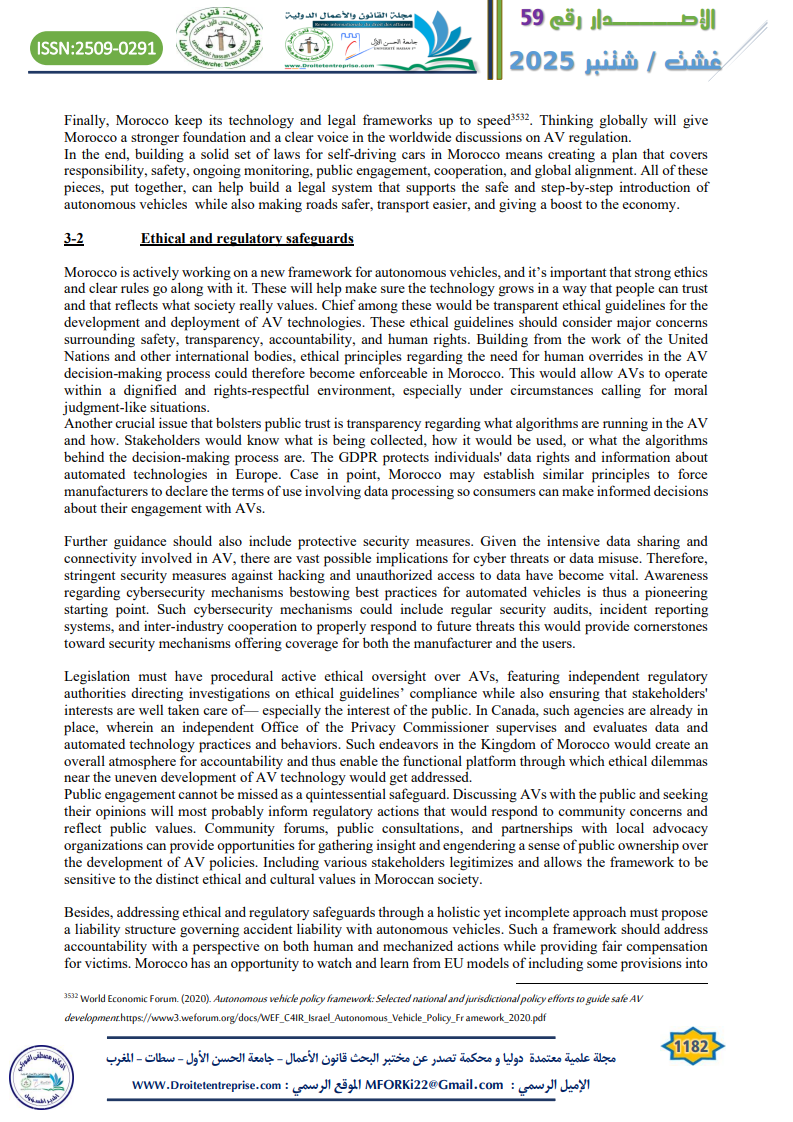
The gender distribution of surveyed respondents is almost equal: 52.2% male and 45.6% female, with only a small portion, 2.2%, preferring not to say what their gender is. This balance gives the perspective on the topic some diversity.
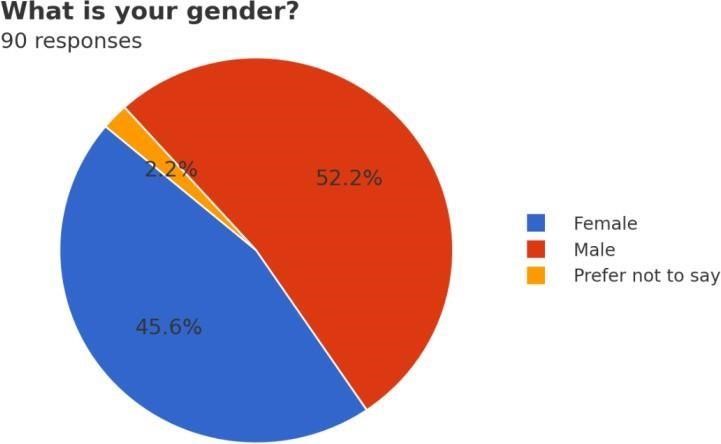
Graph 1: Gender Distribution of Respondents
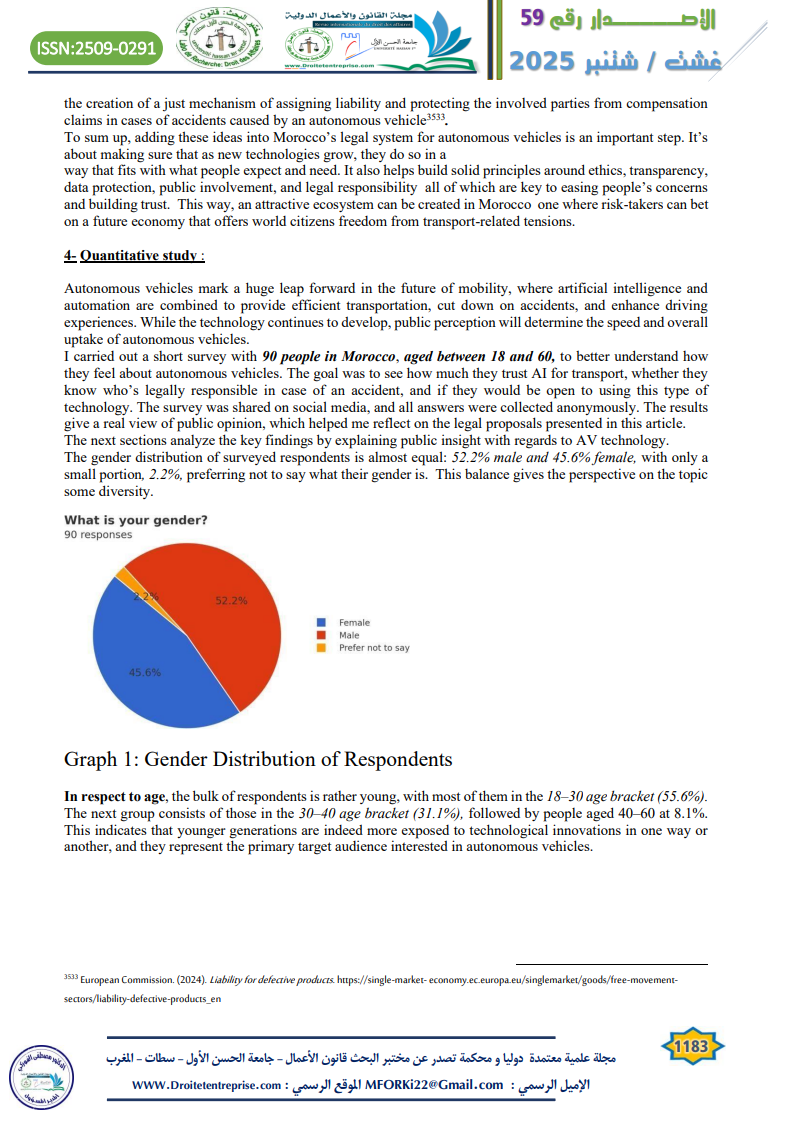
In respect to age, the bulk of respondents is rather young, with most of them in the 18–30 age bracket (55.6%). The next group consists of those in the 30–40 age bracket (31.1%), followed by people aged 40–60 at 8.1%. This indicates that younger generations are indeed more exposed to technological innovations in one way or another, and they represent the primary target audience interested in autonomous vehicles.

Graph 2: Age Group Distribution of Respondents
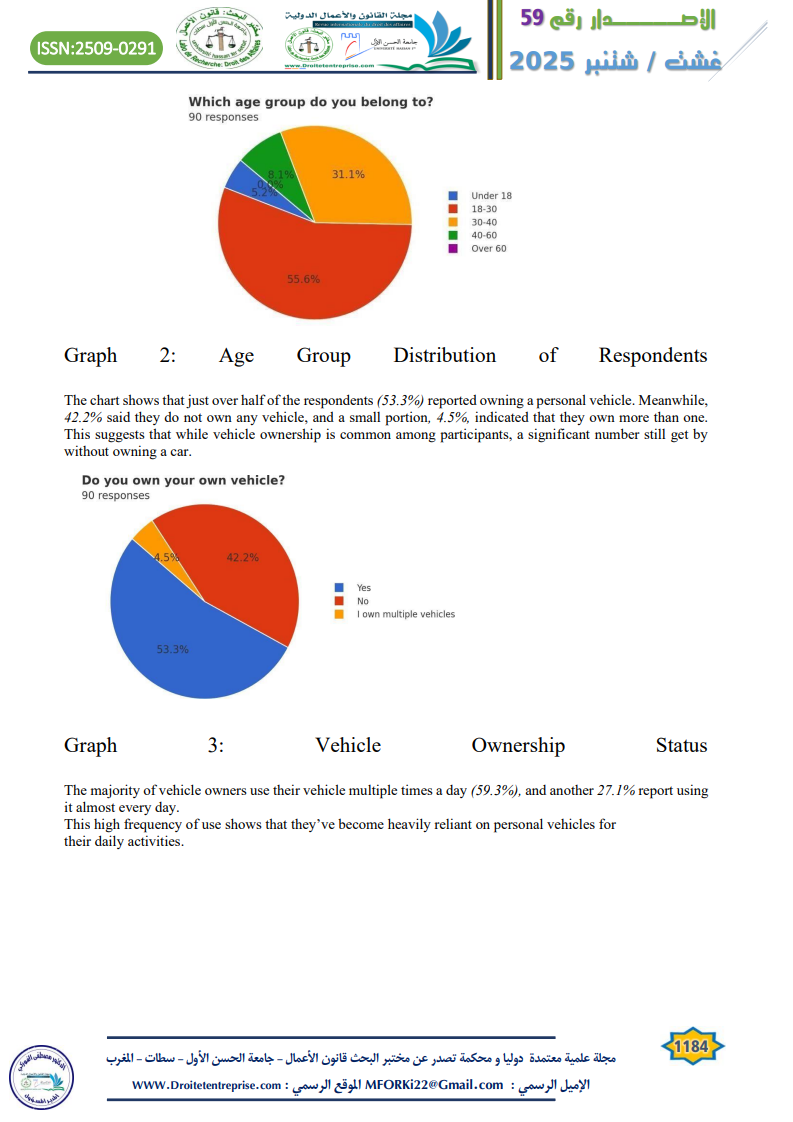
The chart shows that just over half of the respondents (53.3%) reported owning a personal vehicle. Meanwhile, 42.2% said they do not own any vehicle, and a small portion, 4.5%, indicated that they own more than one. This suggests that while vehicle ownership is common among participants, a significant number still get by without owning a car.
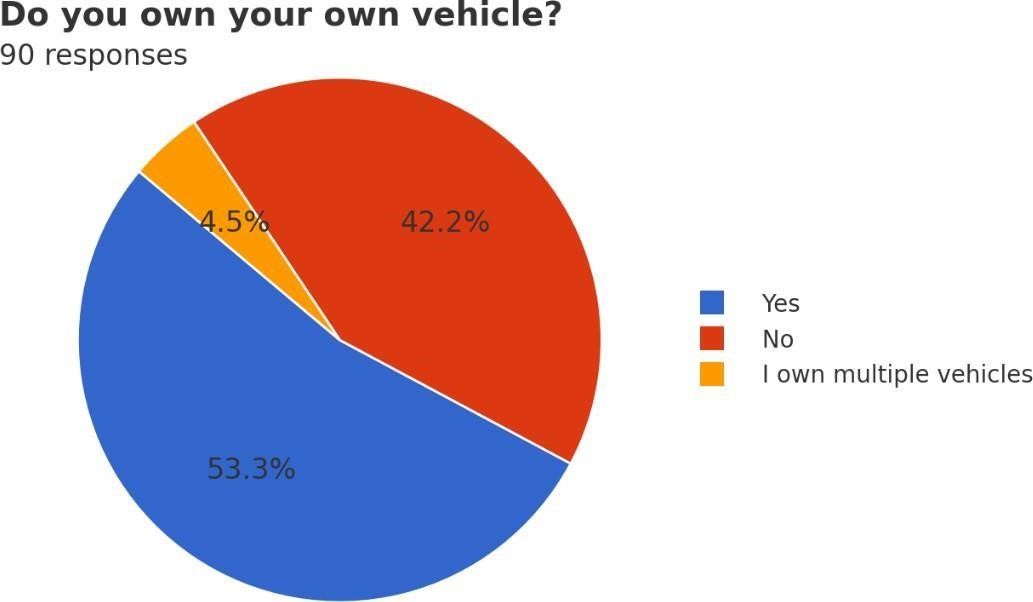
Graph 3: Vehicle Ownership Status
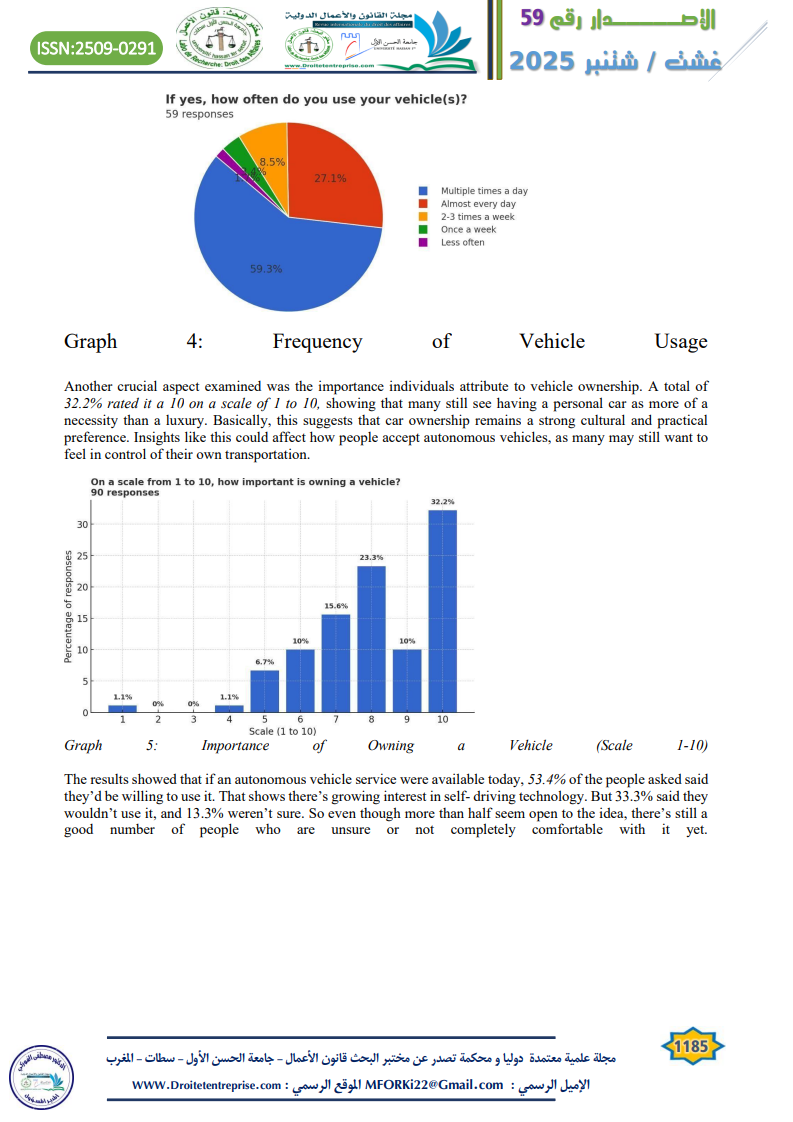
The majority of vehicle owners use their vehicle multiple times a day (59.3%), and another 27.1% report using it almost every day.
This high frequency of use shows that they’ve become heavily reliant on personal vehicles for
their daily activities.
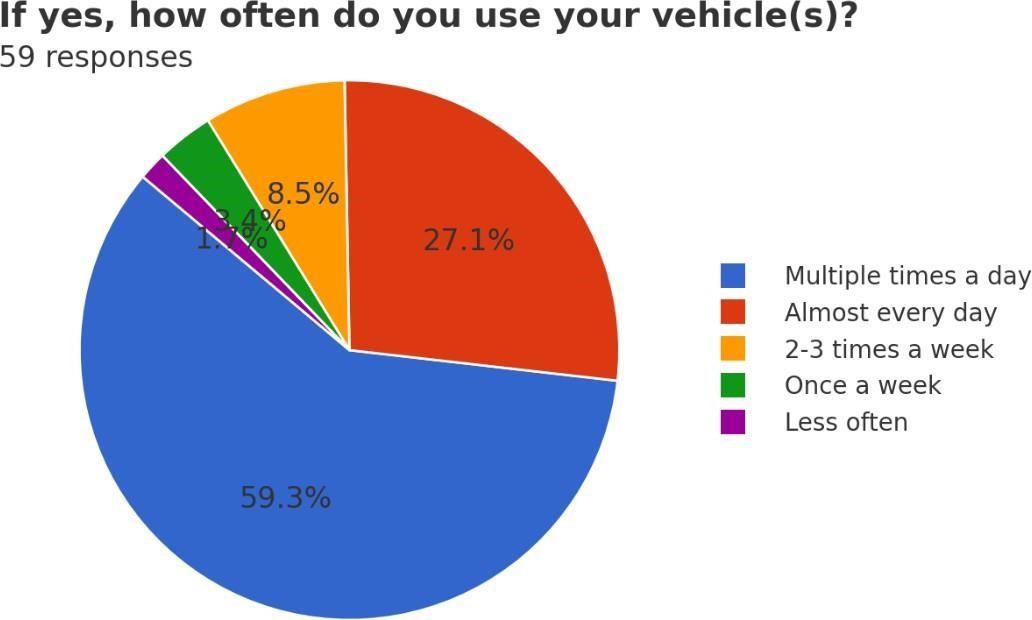
Graph 4: Frequency of Vehicle Usage
Another crucial aspect examined was the importance individuals attribute to vehicle ownership. A total of 32.2% rated it a 10 on a scale of 1 to 10, showing that many still see having a personal car as more of a necessity than a luxury. Basically, this suggests that car ownership remains a strong cultural and practical preference. Insights like this could affect how people accept autonomous vehicles, as many may still want to feel in control of their own transportation.

Graph 5: Importance of Owning a Vehicle (Scale 1-10)
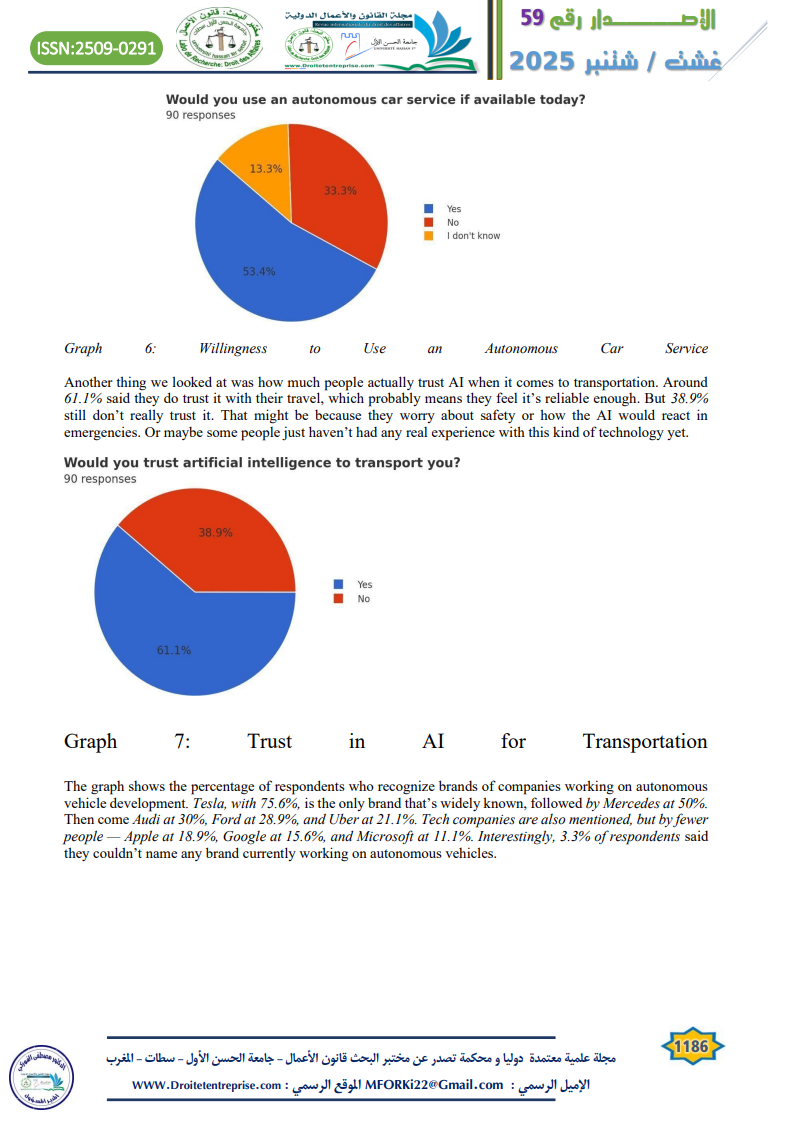
The results showed that if an autonomous vehicle service were available today, 53.4% of the people asked said they’d be willing to use it. That shows there’s growing interest in self- driving technology. But 33.3% said they wouldn’t use it, and 13.3% weren’t sure. So even though more than half seem open to the idea, there’s still a good number of people who are unsure or not completely comfortable with it yet.
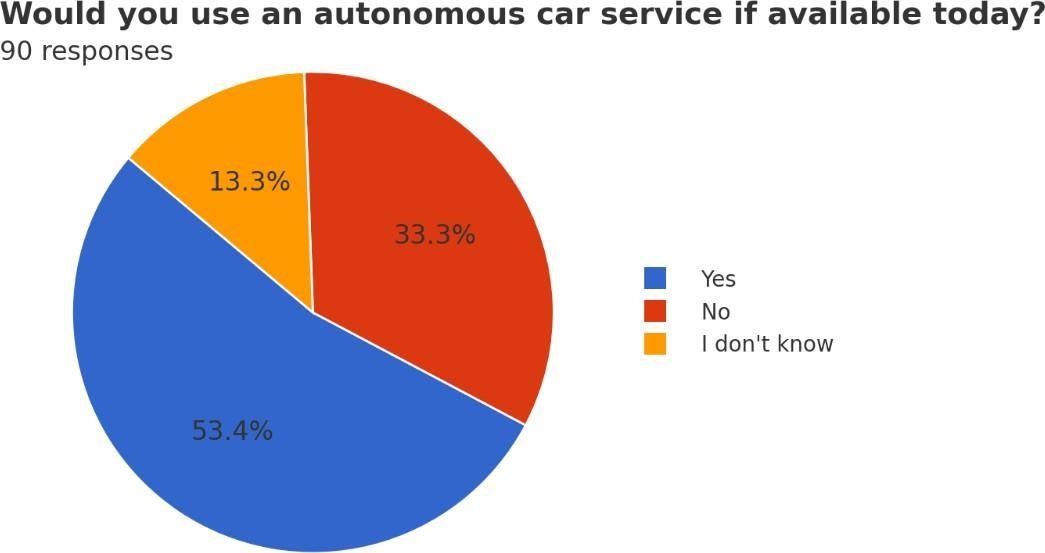
Graph 6: Willingness to Use an Autonomous Car Service
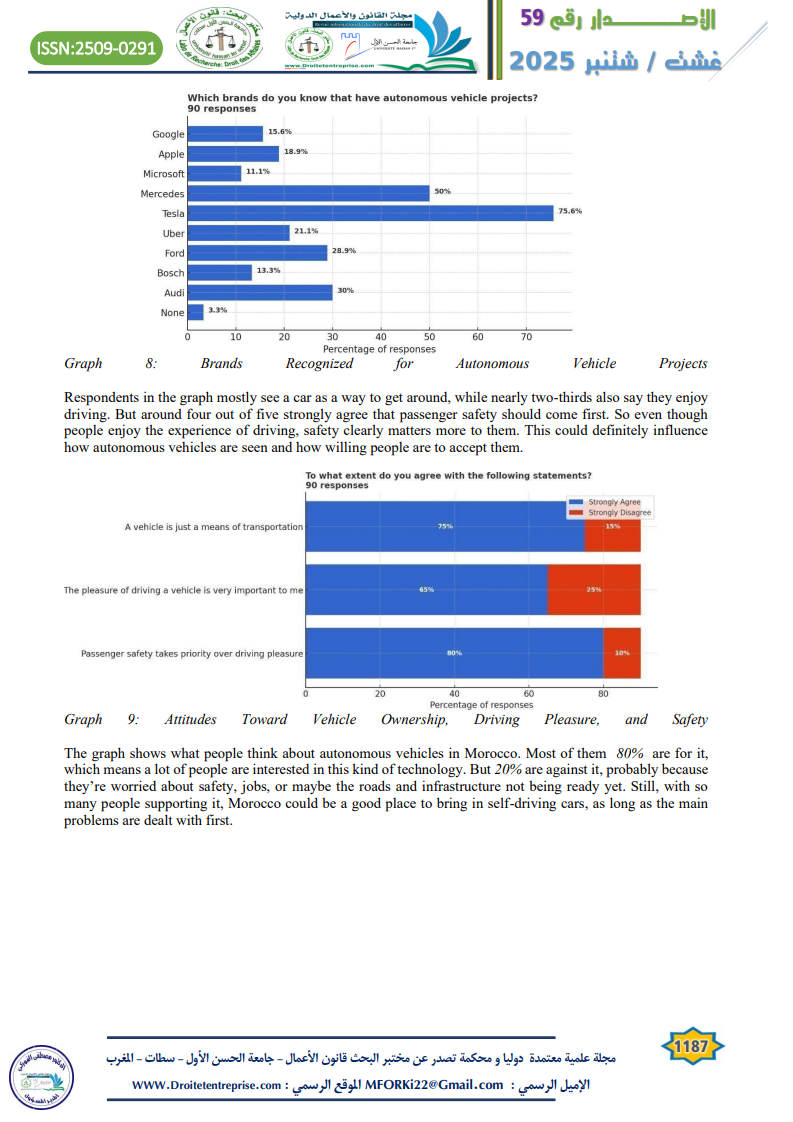
Another thing we looked at was how much people actually trust AI when it comes to transportation. Around 61.1% said they do trust it with their travel, which probably means they feel it’s reliable enough. But 38.9% still don’t really trust it. That might be because they worry about safety or how the AI would react in emergencies. Or maybe some people just haven’t had any real experience with this kind of technology yet.
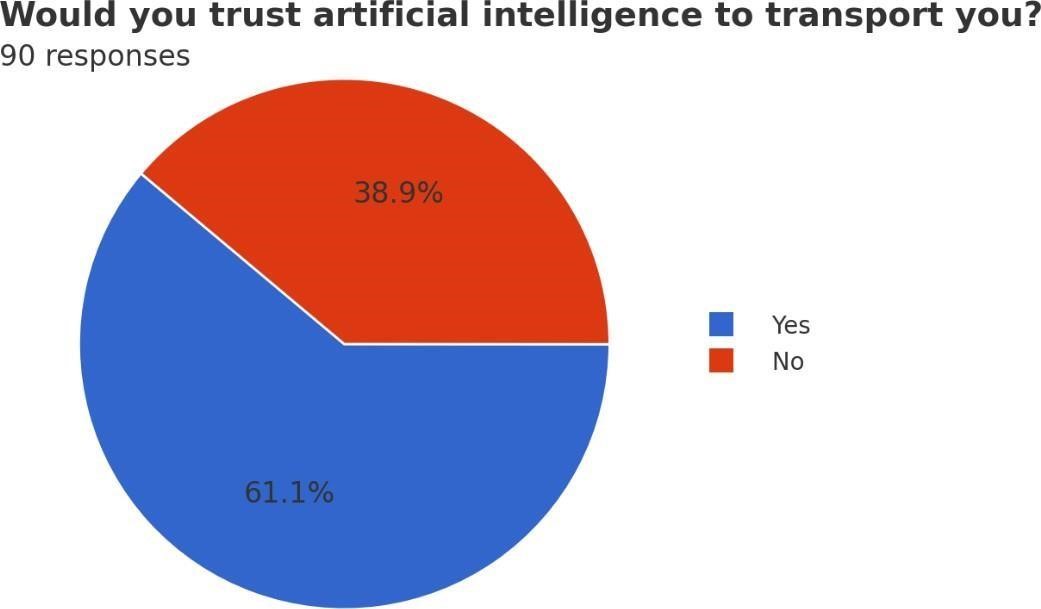
Graph 7: Trust in AI for Transportation
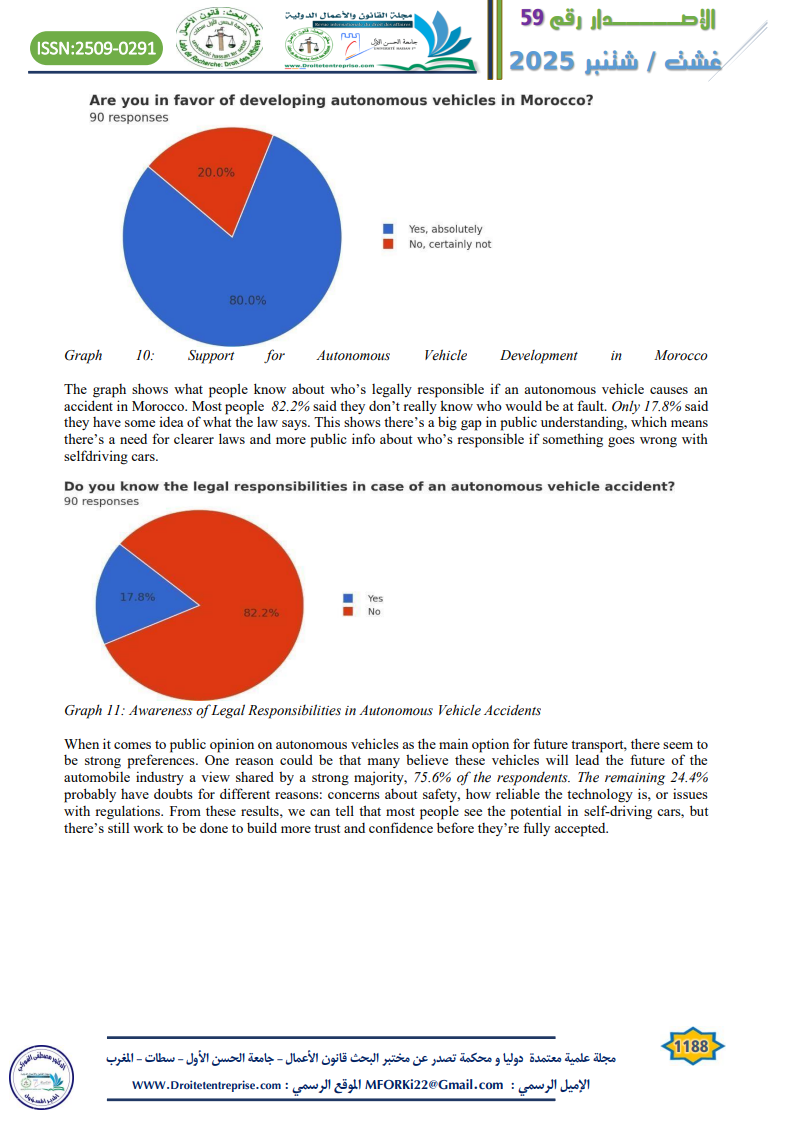
The graph shows the percentage of respondents who recognize brands of companies working on autonomous vehicle development. Tesla, with 75.6%, is the only brand that’s widely known, followed by Mercedes at 50%. Then come Audi at 30%, Ford at 28.9%, and Uber at 21.1%. Tech companies are also mentioned, but by fewer people — Apple at 18.9%, Google at 15.6%, and Microsoft at 11.1%. Interestingly, 3.3% of respondents said they couldn’t name any brand currently working on autonomous vehicles.
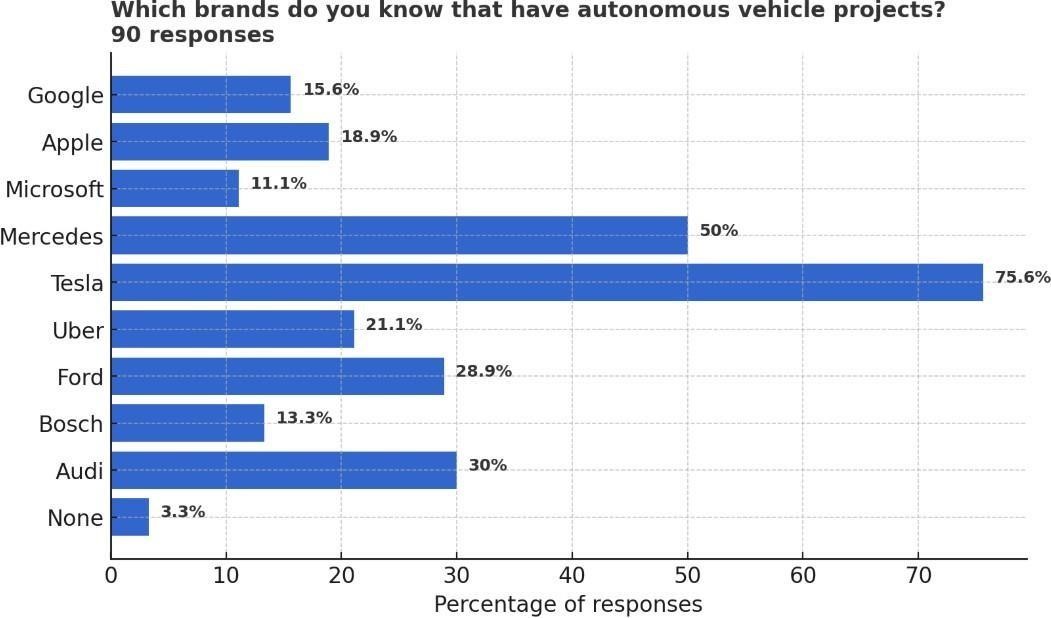
Graph 8: Brands Recognized for Autonomous Vehicle Projects
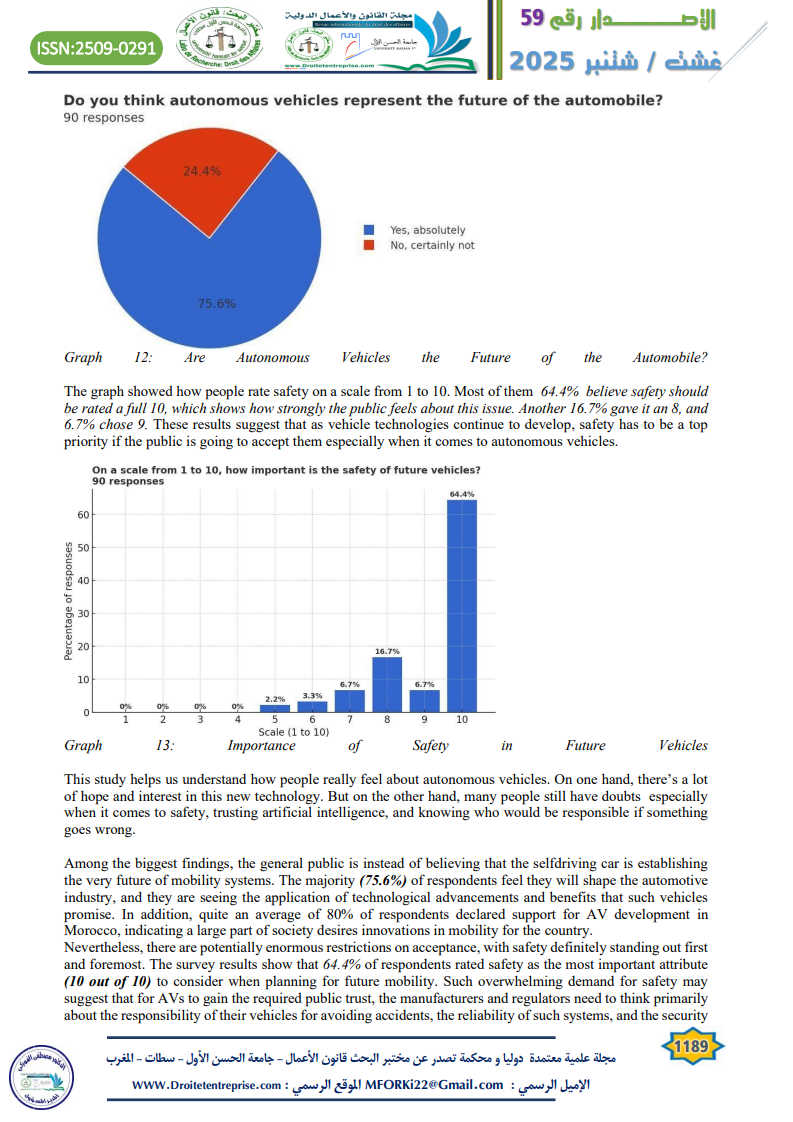
Respondents in the graph mostly see a car as a way to get around, while nearly two-thirds also say they enjoy driving. But around four out of five strongly agree that passenger safety should come first. So even though people enjoy the experience of driving, safety clearly matters more to them. This could definitely influence how autonomous vehicles are seen and how willing people are to accept them.
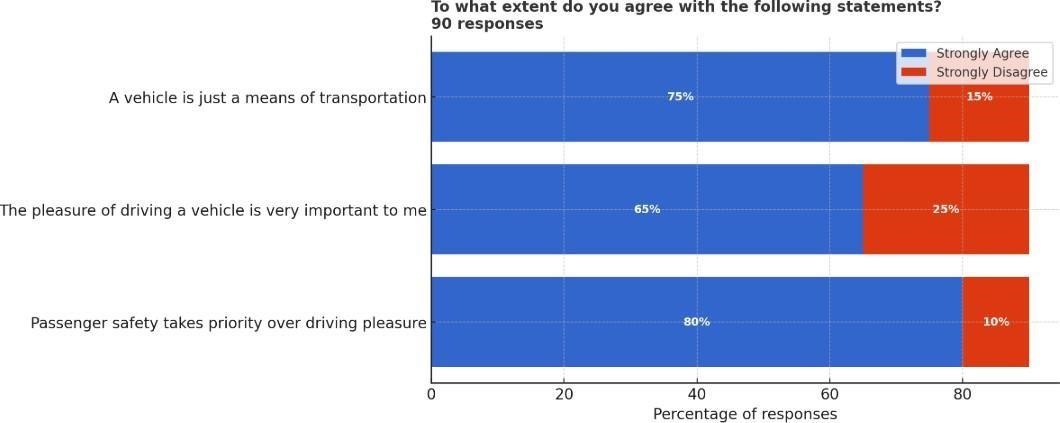
Graph 9: Attitudes Toward Vehicle Ownership, Driving Pleasure, and Safety
The graph shows what people think about autonomous vehicles in Morocco. Most of them 80% are for it, which means a lot of people are interested in this kind of technology. But 20% are against it, probably because they’re worried about safety, jobs, or maybe the roads and infrastructure not being ready yet. Still, with so many people supporting it, Morocco could be a good place to bring in self-driving cars, as long as the main problems are dealt with first.
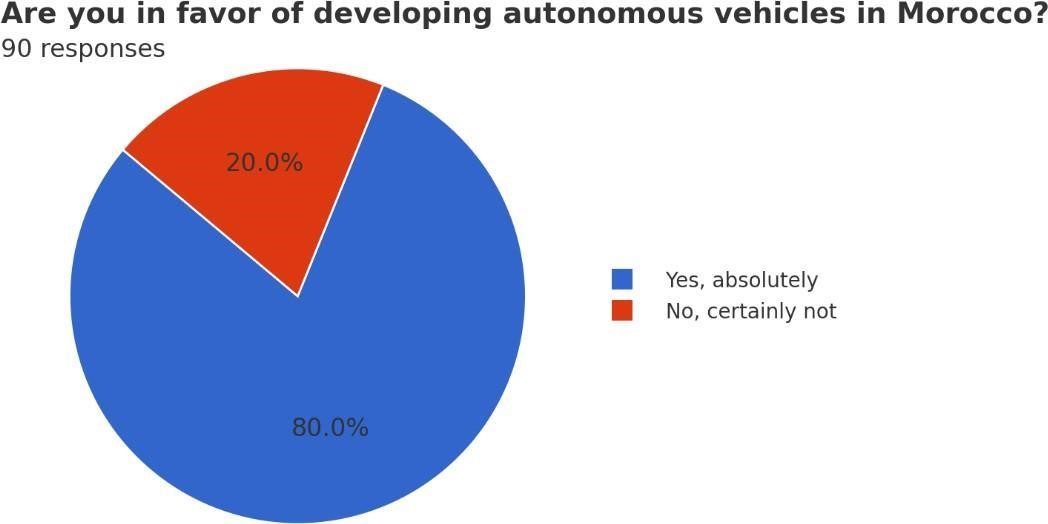
Graph 10: Support for Autonomous Vehicle Development in Morocco
The graph shows what people know about who’s legally responsible if an autonomous vehicle causes an accident in Morocco. Most people 82.2% said they don’t really know who would be at fault. Only 17.8% said they have some idea of what the law says. This shows there’s a big gap in public understanding, which means there’s a need for clearer laws and more public info about who’s responsible if something goes wrong with selfdriving cars.

Graph 11: Awareness of Legal Responsibilities in Autonomous Vehicle Accidents
When it comes to public opinion on autonomous vehicles as the main option for future transport, there seem to be strong preferences. One reason could be that many believe these vehicles will lead the future of the automobile industry a view shared by a strong majority, 75.6% of the respondents. The remaining 24.4% probably have doubts for different reasons: concerns about safety, how reliable the technology is, or issues with regulations. From these results, we can tell that most people see the potential in self-driving cars, but there’s still work to be done to build more trust and confidence before they’re fully accepted.
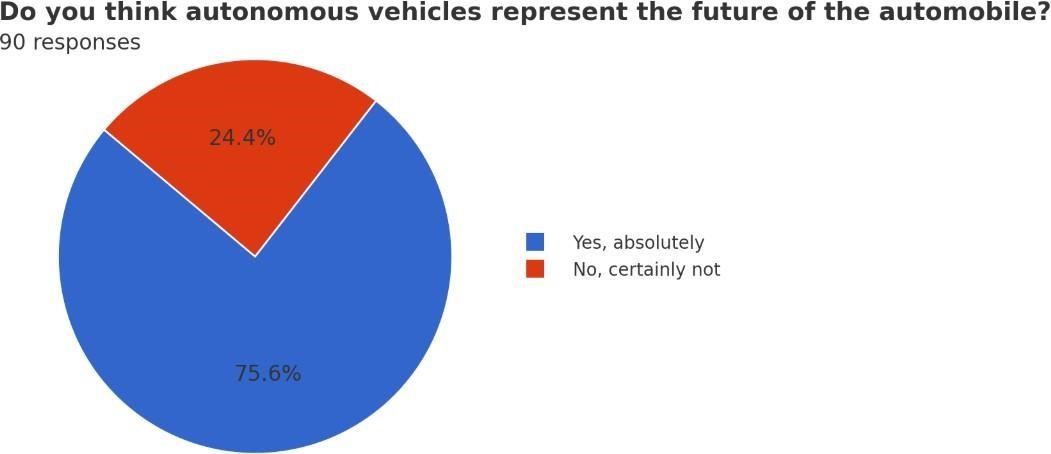
Graph 12: Are Autonomous Vehicles the Future of the Automobile?
The graph showed how people rate safety on a scale from 1 to 10. Most of them 64.4% believe safety should be rated a full 10, which shows how strongly the public feels about this issue. Another 16.7% gave it an 8, and 6.7% chose 9. These results suggest that as vehicle technologies continue to develop, safety has to be a top priority if the public is going to accept them especially when it comes to autonomous vehicles.
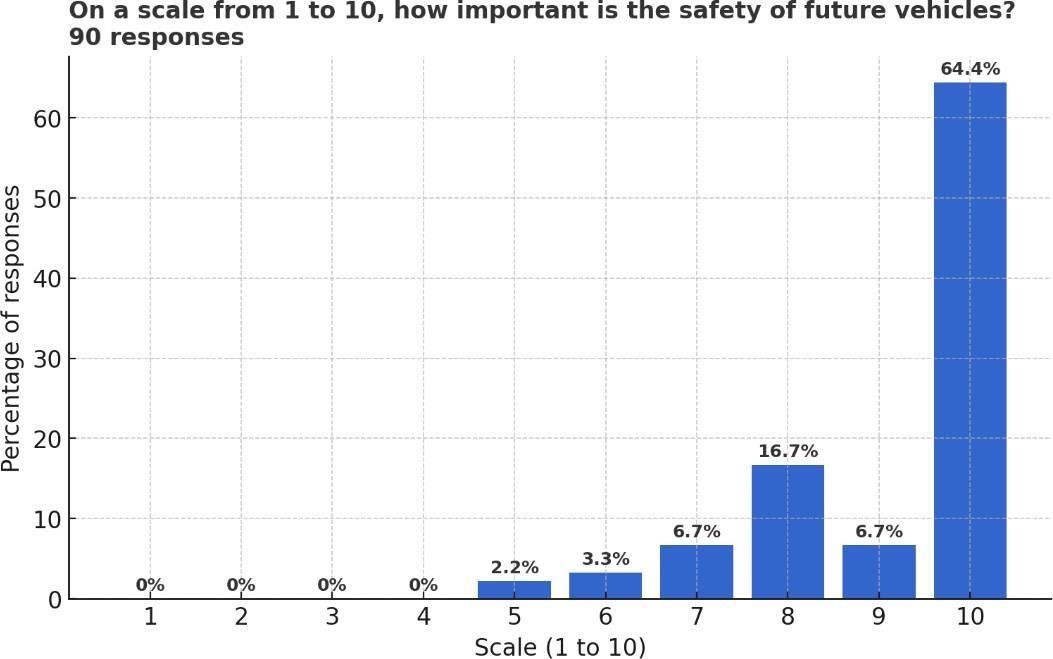
Graph 13: Importance of Safety in Future Vehicles
This study helps us understand how people really feel about autonomous vehicles. On one hand, there’s a lot of hope and interest in this new technology. But on the other hand, many people still have doubts especially when it comes to safety, trusting artificial intelligence, and knowing who would be responsible if something goes wrong.
Among the biggest findings, the general public is instead of believing that the selfdriving car is establishing the very future of mobility systems. The majority (75.6%) of respondents feel they will shape the automotive industry, and they are seeing the application of technological advancements and benefits that such vehicles promise. In addition, quite an average of 80% of respondents declared support for AV development in Morocco, indicating a large part of society desires innovations in mobility for the country.
Nevertheless, there are potentially enormous restrictions on acceptance, with safety definitely standing out first and foremost. The survey results show that 64.4% of respondents rated safety as the most important attribute (10 out of 10) to consider when planning for future mobility. Such overwhelming demand for safety may suggest that for AVs to gain the required public trust, the manufacturers and regulators need to think primarily about the responsibility of their vehicles for avoiding accidents, the reliability of such systems, and the security of passengers. Not only is public knowledge about vehicle ownership important here, but also the lack of constructed law surrounding autonomous vehicles is a very critical challenge. Some 82.2% of respondents indicated there could be ignorance about who assumes responsibility in case of an autonomous vehicle crash. This highlights the major gap in man-in-the-street cognition, demanding the thorough establishment of legal frameworks and liability outlines to ensure responsibility on the part of industry stakeholders and decision-makers. Such uncertainties surrounding supervisory structures and great uncertainty regarding who should assume liability in an AV accident may potentially curtail public acceptance and government approval.
Additionally, the same good old-school ideas about vehicle ownership and driving are still very potent. The survey indicated that a significant number of participants still value owning and driving their vehicles, as 53.3% own at least one car, whereas only 32.2% see car ownership as very important (10 out of 10). Furthermore, a majority of respondents (65%) indicated that driving pleasure is important for them, signifying that the emotional and psychological aspects of driving cannot be disregarded.
The data show that the transition to fully autonomous mobility within our society may take a long time, as cultural habits and personal preference seemingly reign heavily over decision-making on transport projects. The results of the survey also show that brand recognition has a very important role in how the public views AV technology. Most of the respondents were familiar with Tesla (75.6%) and Mercedes (50%) in the autonomous vehicle discussion, withsuch companies leading discussions of safety and innovation. There is, however, a non- negligible figure of 3.3% who are ignorant of any brand of such vehicles, hence the need for public education regarding advancements in the sector can neither be overemphasized nor limited.
The study also mentions a willingness among members of the public to use AV services. The findings indicate that around 53.4% of respondents displayed a positive acceptance towards the use of autonomous vehicles; thus, such acceptance could be taken to represent a fair competence towards alteration that exists. Additionally, however, 33.3% clearly stated that they would not use an autonomous vehicle service, whereas 13.3% remained ambiguous, which implies that this shows progress, but doubts and hesitations still exist. One possible reason for the skepticism is that it is due to worries covering such things as the reliability of AI, risk of accidents, and personal loss of control in driving decisions.
The findings of this study validated the notion that while AVs are slowly creeping towards acceptance, there remain very fundamental areas needing to be addressed before the feasible test of complete acceptance could be sustained.
The most critical determinants impacting public perception include: Safety and Trust in AI, requiring that people be convinced AV technology is safer than human-driven vehicles, with systems in place to avoid malfunction and accidents; Clear Legal and Regulatory Structure, where governments need to provide a clear indication of liability for an accident where it benefits consumers and manufacturers; Gradual Transition and Cultural Adaptation, with attachment to traditional driving and ownership suggesting that full automation away from complete dependence will take a long time; and Public Awareness and Education, where differing awareness existent in the populace regarding AV projects and their positives requires articulation by brands, governments, and researchers to dispel, rectify irrational fears, and highlight the positives, particularly in AV adoption.
In conclusion, autonomous vehicles could bring about a revolutionary change in transportation, ensuring safety, diminished traffic congestion, and improved access. Yet for this technology to be effective, the different, yet limited, concerns much to do with the aspects of safety, responsibility, and personal driving preferences must be put to rest in its plan designs. The study admits that many people remain hopeful for AVs in the future, yet much has to unfold for trust and belief in that feat to uncoil through processes ripe for safety, regulations, and education.
The road ahead looks to be promising for fully autonomous mobility, but will need a careful and delicate balancing act between strategic development, public engagement, and policydevelopment in order to avoid any bump or skid that may bring about lack of political will and consumer acceptance. With manufacturers, policymakers, and consumers coming together to address these issues, the path towards autonomous vehicles can provide a truly spacious definition for the future of transportation at the global scale.
Conclusion:
In conclusion, while Morocco eases towards the inclusion of autonomous vehicles within its transport ecosystem, a concrete legal framework should be built around it, interlacing the technicalities of the automobile with the contemporary ethical and regulatory demands. As an automotive engineer doing a doctorate, I lean towards a dual perspective, where I think on the one hand of AV technology as very exciting and dynamic, but on the flip side, I give importance to responsible governance, which is key in the public’s database of trust.
It is these facets of such a dual view that inform what my recommendations will look like: a framework treating the multi-faceted nature of AV deployment but ensuring safety and accountability.
Paramount is a strong legal framework built basically on safety. Regulations should create a standard enshrining principles of engineering for AV technologies, including operational schema redundancy, fail-safe mechanism tests, and rigorous standards on safety. Drawing from, amongst others, experiences from the United States and the European Union, Morocco should enact strict pre-market approval processes requiring extensive testing through various real-world scenarios.
Effective cooperation between automotive engineers and regulatory authorities is core because this defines the scope and general frame of the tests to be adopted, hence making those tests both technically sound and aligned with the local road condition. This cooperation will not only create increased vehicle safety but also give greater confidence to the public in the reliability of AVs.
Besides the safety protocols, the liability standards that outline responsibility after AV accident cases will further add to the requirements for the legal framework. The legal terrain centered on AVs brings unique challenges, notably those that border on identifying manufacturer liability and driver responsibility. Lessons could be drawn from a suggestion made in the European Union supporting a strict liability model for AV manufacturers. Here it would ensure that, perhaps, AV manufacturers are compelled to uphold high safety standards, with the process of obtaining compensation for accident victims not being cumbersome even when liability disputes arise. Acceptance of such liability standards will enable Morocco tocreate a sense of safety for its users and manufacturers in an environment where innovation can unfold, while at the same time ensuring that public interests are not threatened..
Central to the recommendations is the establishment of ethical guidelines in developing and deploying technologies of AVs. Ethics change with time, because time brings along new ethical dilemmas. Continued development of these technologies will only serve to increase the difficulties of the ethical quandaries surrounding them one of them being in scenarios that entail AVs making split-second decisions concerning accident situations. An interlude of ethics into guiding engineering practice will give some leeway for manufacturers in developing AV systems that articulate human safety and well-being.
Ethical guidelines should result from collaboration between ethicists, sociologists, and members of the community engaged in confronting the ethical process. Public engagement is another fundamental element of what this legal framework might deal with. Teaching the public the advantages and risk concerns regarding AV technologies could ensure acceptance and alleviate fears about safety and reliability. Initiatives like community workshops, pilot programs, and interactive public consultations in Morocco can ease the adoption of AV technology; these will enable citizens to express their concerns and suggestions freely. Through an inclusive dialogue, Morocco can achieve ownership of the regulatory process that builds trust and allows more widespread acceptance of autonomous vehicles.
Besides, I would suggest that an independent regulatory body be formed to oversee the ethical application of such AVs. This entity would be a guardian of the public good safeguarding the public interest by enforcing adherence to safety standards and ethical codes of conduct, while constantly reviewing the new changes in AV technologies. Such a body could, for example, mirror Canada’s Office of the Privacy Commissioner, combining compliance monitoring with a more active role as a consumer advocate, while ensuring consumers’ rights are upheld as the pace of technological change continues to escalate.
Certainly, the Moroccan government heralds the establishment of strategic partnerships as part of due diligence to obtain access to similar trends in international norm formulation on AVs in Morocco. Interacting with multinational standard-setting organizations will aid Morocco in understanding certain trends and best practices, thereby aligning its policies with those in other areas of jurisdiction. This interrelationship can facilitate borderless innovations and collaboration between local and international manufacturers and technology providers, thereby guaranteeing Morocco a competitive stand on the global automotive platform.
Bibliography:
- Algarni, A., & Thayananthan, V. (2022). Autonomous vehicles: The cybersecurity vulnerabilities and countermeasures for big data communication. Symmetry, 14(12), 2494. https://doi.org/10.3390/sym14122494
- Amachraa, A. (2023). Driving the dream: Morocco’s rise in the global automotive industry. Policy Center for the New South.
https://www.policycenter.ma/sites/default/files/2023-05/PP_09-
- Bagloee, S., Tavana, M., Asadi, M., & Oliver, T. (2016). Autonomous vehicles:
Challenges, opportunities, and future implications for transportation policies.
Journal of Modern Transportation, 24, 284–303. https://doi.org/10.1007/s405340160117-3
- Bayamlıoğlu, E., & Leenes, R. (2018). Data-driven decision-making and the ‘rule of law’. TILT Law & Technology Working Paper Series. Tilburg University. https://www.researchgate.net/publication/329873662
- Borenstein, J., Herkert, J., & Miller, K. (2019). Self-driving cars and engineering ethics: The need for a system-level analysis. Science and Engineering Ethics, 25, 383–398. https://doi.org/10.1007/s11948-017-0006-0
- Celestin, M., & Vanitha, N. (2022). The future of insurance: What self-driving cars mean for you. Insurance Today, 39–47.
- Chougule, A., Chamola, V., Sam, A., Yu, F., & Sikdar, B. (2023). A comprehensive review on limitations of autonomous driving and its impact on accidents and collisions. IEEE Open Journal of Vehicular Technology, 1–20. https://doi.org/10.1109/OJVT.2023.3335180
- Chadha, K. (2024). Bias and fairness in artificial intelligence: Methods and mitigation strategies. International Journal for Research Publication and Seminar, 15, 36–49. https://doi.org/10.36676/jrps.v15.i3.1425
- Citron, D. K., & Pasquale, F. (2014). The scored society: Due process for automated predictions. Washington Law Review, 89(1), 1–33. https://digitalcommons.law.uw.edu/wlr/vol89/iss1/2
- De Regter, T. (2019). Liability and automated vehicles (Master’s thesis). Tilburg University. https://www.tilburguniversity.edu
- El-Kady, R. (2024). Self-driving cars: Legal challenges and criminal law implications. In Legal Aspects of Autonomous Vehicles (pp. 303–315).
https://doi.org/10.4018/979-8-3693-4252-7.ch016
- European Commission. (2024). Liability for defective products. https://singlemarket-economy.ec.europa.eu/single-market/goods/freemovementsectors/liability-defective-products_en
- European Commission. (2022). Vehicle safety and automated/connected
vehicles. https://ec.europa.eu
- European Parliament. (2016). General Data Protection Regulation (GDPR). Official Journal of the European Union.
- Faivre d’Arcier, B., & Lecler, Y. (2014). Promoting next generation vehicles in Japan: The smart communities and their experimentations. International Journal of Automotive Technology and Management, 14(3–4), 324–346.
https://doi.org/10.1504/IJATM.2014.065296
- Favarò, F., Eurich, S., & Nader, N. (2018). Autonomous vehicles’ disengagements: Trends, triggers, and regulatory limitations. Accident Analysis
& Prevention, 110, 136–148. https://doi.org/10.1016/j.aap.2017.11.001
- Gogoll, J., & Müller, J. (2017). Autonomous cars: In favor of a mandatory ethics setting. Science and Engineering Ethics, 23, 681–700.
https://doi.org/10.1007/s11948-016-9806-x
- Imai, T. (2019). Legal regulation of autonomous driving technology: Current conditions and issues in Japan. IATSS Research, 43, 74–82.
https://doi.org/10.1016/j.iatssr.2019.11.009
- Jobin, A., Ienca, M., & Vayena, E. (2019). The global landscape of AI ethics guidelines. Nature Machine Intelligence, 1, 389–399.
https://doi.org/10.1038/s42256-019-0088-2
- Kouroutakis, A. E. (2020). Autonomous vehicles: Regulatory challenges and the response from Germany and UK. Mitchell Hamline Law Review, 46(5), Article 3. https://open.mitchellhamline.edu/mhlr/vol46/iss5/3
- Kriebitz, A., Max, R., & Lütge, C. (2022). The German Act on Autonomous Driving: Why ethics still matters. Philosophy & Technology, 35. https://doi.org/10.1007/s13347-022-00526-2
- Lin, P. (2016). Why ethics matters for autonomous cars. In Autonomes Fahren:
Technologische, rechtliche und gesellschaftliche Aspekte (pp. 23–42).
https://doi.org/10.1007/978-3-662-48847-8_4
- Lohmann, M. F. (2016). Liability issues concerning self-driving vehicles.
European Journal of Risk Regulation, 7(2), 335–341.
https://www.alexandria.unisg.ch/handle/20.500.14171/99959
- Othman, K. (2022). Exploring the implications of autonomous vehicles: A comprehensive review. Innovative Infrastructure Solutions, 7(2), 165. https://doi.org/10.1007/s41062-022-00763-6
- Pedreschi, D., Giannotti, F., Guidotti, R., Monreale, A., Ruggieri, S., & Turini, F. (2019). Meaningful explanations of black box AI decision systems. In Proceedings of the Thirty-Third AAAI Conference on Artificial Intelligence (AAAI-19), 15–22.
- Rosemadi, J., Khong, D. W. K., & Radhakrishna, G. (2022). Civil liability of autonomous vehicles: A review of literature. IIUM Law Journal, 30, 155–179. https://doi.org/10.31436/iiumlj.v30i2.740
- Sever, T., & Contissa, G. (2024). Automated driving regulations – Where are we now? Transportation Research Interdisciplinary Perspectives, 24, 101033.
https://doi.org/10.1016/j.trip.2024.101033
- Stamp, H. (2023). The reckless tolerance of unsafe autonomous vehicle testing:
Uber’s culpability for the criminal offense of negligent homicide. Journal of Law,
Technology, & the Internet, 15(1), 37–72.
https://scholarlycommons.law.case.edu/cgi/viewcontent.cgi?article=1155&cont ext=jolti
- Stilgoe, J., & Mladenovic, M. (2022). The politics of autonomous vehicles.
Humanities and Social Sciences Communications, 9, 1–8.
https://doi.org/10.1057/s41599-022-01463-3
- Smyth, J., Ulahannan, A., Florek, F., Shaw, E., & Mansfield, N. (2021).
Understanding misuse of partially automated vehicles: A discussion of NTSB’s findings of the 2018 Mountain View Tesla crash. ResearchGate. https://doi.org/10.13140/RG.2.2.31512.01283
- Tan, S. Y., & Taeihagh, A. (2021). Adaptive governance of autonomous vehicles:
Accelerating the adoption of disruptive technologies in Singapore.
Government Information Quarterly, 38(2), 101546.
https://doi.org/10.1016/j.giq.2020.101546
- Thaker, R. (2022). Autonomous vehicles: Challenges, opportunities, and policy implications for future transportation systems. Zenodo.
https://doi.org/10.5281/zenodo.14001660
- Tran, D., & Le, C. (2022). Developing a regulatory framework for autonomous vehicles: A proximal analysis of the European approach and its application to ASEAN countries. TalTech Journal of European Studies, 12, 165–188. https://doi.org/10.2478/bjes-2022-0016
- U.S. Department of Transportation, National Highway Traffic Safety Administration. (2022). Cybersecurity best practices for the safety of modern vehicles. https://www.nhtsa.gov
- Webb, K. (2021). Artificial intelligence and the law: The future of regulation.
Richmond Journal of Law and Technology, 27(2), 1–45. https://jolt.richmond.edu/files/2021/02/Webb-Article.pdf
- World Economic Forum. (2020). Autonomous vehicle policy framework: Selected national and jurisdictional policy efforts to guide safe AV development. https://www3.weforum.org/docs/WEF_C4IR_Israel_Autonomous_Vehicle_Pol i cy_Framework_2020.pdf
- Stilgoe, J., & Mladenovic, M. (2022). The politics of autonomous vehicles. Humanities and Social Sciences
Communications, 9, 1–8. https://doi.org/10.1057/s41599-022-01463-3 ↑
- Stamp, H (2023)the reckless tolerance of unsafe autonomous vehicle testing : Uber’s culpability for the criminal offense of negligent homicide. Journal of Law, technology & the internet, 15(1), 37-72 https://scholarlycommons.law.case.edu/cgi/viewcontent.cgi?article=1155&context=jolti ↑
- Webb, K. (2021). Artificial intelligence and the law: The future of regulation. Richmond Journal of Law and Technology, 27(2), 1–45. https://jolt.richmond.edu/files/2021/02/Webb-Article.pdf
- Stilgoe, J., & Mladenovic, M. (2022). The politics of autonomous vehicles. Humanities and Social Sciences Communications, 9, 1–8. https://doi.org/10.1057/s41599-022-01463-3 ↑
- Webb, K. (2021). Artificial intelligence and the law: The future of regulation. Richmond Journal of Law and Technology, 27(2), 1–45. https://jolt.richmond.edu/files/2021/02/Webb-Article.pdf ↑
- European Commission. (2024). Liability for defective products. https://single-market-
economy.ec.europa.eu/singlemarket/goods/free-movement-sectors/liability-defective-products_en ↑
- Favarò, F., Eurich, S., & Nader, N. (2018). Autonomous vehicles’ disengagements:Trends, triggers, and regulatory limitations. Accident Analysis & Prevention, 110, 136–148. https://doi.org/10.1016/j.aap.2017.11.001 ↑
- Rosemadi, J., Khong, D. W. K., & Radhakrishna, G. (2022). Civil liability ofautonomous vehicles: A review of literature.
IIUM Law Journal, 30, 155–179. https://doi.org/10.31436/iiumlj.v30i2.740 ↑
- Stamp, H. (2023). The reckless tolerance of unsafe autonomous vehicle testing: Uber’s culpability for the criminal offense of negligent homicide. Journal of Law, Technology, & the Internet, 15(1), 37–72.
https://scholarlycommons.law.case.edu/cgi/viewcontent.cgi?article=1155&context=jolti
- Gogoll, J., & Müller, J. (2017). Autonomous cars: In favor of a mandatory ethics setting. Science and Engineering Ethics, 23, 681–700. https://doi.org/10.1007/s11948-016-9806-x ↑
- Jobin, A., Ienca, M., & Vayena, E. (2019). The global landscape of AI ethics guidelines. Nature Machine Intelligence, 1, 389–399. https://doi.org/10.1038/s42256-019-0088-2 ↑
- Pedreschi, D., Giannotti, F., Guidotti, R., Monreale, A., Ruggieri, S., & Turini, F. (2019). Meaningful explanations of black box AI decision systems. In Proceedings of the Thirty-Third AAAI Conference on Artificial Intelligence (AAAI-19), 15–22. ↑
- Chougule, A., Chamola, V., Sam, A., Yu, F., & Sikdar, B. (2023). A comprehensive review on limitations of autonomous driving and its impact on accidents and collisions. IEEE Open Journal of Vehicular Technology, 1–20. https://doi.org/10.1109/OJVT.2023.3335180 ↑
- Smyth, J., Ulahannan, A., Florek, F., Shaw, E., & Mansfield, N. (2021). Understanding misuse of partially automated vehicles: A discussion of NTSB’s findings of the 2018 Mountain View Tesla crash. ResearchGate. https://doi.org/10.13140/RG.2.2.31512.01283 ↑
- Lin, P. (2016). Why ethics matters for autonomous cars. In Autonomes Fahren:Technologische, rechtliche und gesellschaftliche Aspekte (pp. 23–42). https://doi.org/10.1007/978-3-662-48847-8_4 ↑
- Gogoll, J., & Müller, J. (2017). Autonomous cars: In favor of a mandatory ethics setting. Science and Engineering Ethics, 23, 681–700. https://doi.org/10.1007/s11948-016-9806-x ↑
- Chadha, K. (2024). Bias and fairness in artificial intelligence: Methods and mitigation strategies. International Journal for Research Publication and Seminar, 15, 36–49. https://doi.org/10.36676/jrps.v15.i3.1425 ↑
- Algarni, A., & Thayananthan, V. (2022). Autonomous vehicles: The cybersecurity vulnerabilities and countermeasures for big data communication. Symmetry, 14(12), 2494. https://doi.org/10.3390/sym14122494 ↑
- Webb, K. (2021). Artificial intelligence and the law: The future of regulation. Richmond Journal of Law and Technology, 27(2), 1–45. https://jolt.richmond.edu/files/2021/02/Webb-Article.pdf ↑
- Algarni, A., & Thayananthan, V. (2022). Autonomous vehicles: The cybersecurity vulnerabilities and countermeasures for big data communication. Symmetry, 14(12), 2494. https://doi.org/10.3390/sym14122494 ↑
- Borenstein, J., Herkert, J., & Miller, K. (2019). Self-driving cars and engineering ethics: The need for a system-level analysis. Science and Engineering Ethics, 25, 383–398. https://doi.org/10.1007/s11948-017-0006-0 ↑
- Celestin, M., & Vanitha, N. (2022). The future of insurance: What self-driving cars mean for you. Insurance Today, 39– 47. ↑
- European Commission. (2024). Liability for defective products. https://single-market-
economy.ec.europa.eu/singlemarket/goods/free-movement-sectors/liability-defective-products_en ↑
- Thaker, R. (2022). Autonomous vehicles: Challenges, opportunities, and policy implications for future transportation systems. Zenodo.https://doi.org/10.5281/zenodo.14001660 ↑
- Sever, T., & Contissa, G. (2024). Automated driving regulations – Where are we now? Transportation Research
Interdisciplinary Perspectives, 24, 101033.https://doi.org/10.1016/j.trip.2024.101033 ↑
- U.S. Department of Transportation, National Highway Traffic Safety Administration.(2022). Cybersecurity best practices for the safety of modern vehicles. https://www.nhtsa.gov ↑
- European Commission. (2024). Liability for defective products. https://single-market-
economy.ec.europa.eu/singlemarket/goods/free-movement-sectors/liability-defective-products_en ↑
- Tran, D., & Le, C. (2022). Developing a regulatory framework for autonomous vehicles: A proximal analysis of the European approach and its application to ASEAN countries. TalTech Journal of European Studies, 12, 165–188.
https://doi.org/10.2478/bjes-2022-0016 ↑
- Tan, S. Y., & Taeihagh, A. (2021). Adaptive governance of autonomous vehicles: Accelerating the adoption of disruptive technologies in Singapore. Government Information Quarterly, 38(2), 101546. https://doi.org/10.1016/j.giq.2020.101546 30
Amachraa, A. (2023). Driving the dream: Morocco’s rise in the global automotive industry. Policy Center for the New South. https://www.policycenter.ma/sites/default/files/2023-05/PP_09-23_AMACHRAA.pdf ↑
- European Commission. (2024). Liability for defective products. https://single-market-
economy.ec.europa.eu/singlemarket/goods/free-movement-sectors/liability-defective-products_en ↑
- Tran, D., & Le, C. (2022). Developing a regulatory framework for autonomous vehicles: A proximal analysis of the European approach and its application to ASEAN countries. TalTech Journal of European Studies, 12, 165–188.
https://doi.org/10.2478/bjes-2022-0016 ↑
- Bagloee, S., Tavana, M., Asadi, M., & Oliver, T. (2016). Autonomous vehicles: Challenges, opportunities, and future implications for transportation policies. Journal of Modern Transportation, 24, 284–303. https://doi.org/10.1007/s405340160117-3 ↑
- Kouroutakis, A. E. (2020). Autonomous vehicles: Regulatory challenges and the response from Germany and UK. Mitchell Hamline Law Review, 46(5), Article 3. https://open.mitchellhamline.edu/mhlr/vol46/iss5/3 ↑
- Tran, D., & Le, C. (2022). Developing a regulatory framework for autonomous vehicles: A proximal analysis of the European approach and its application to ASEAN countries. TalTech Journal of European Studies, 12, 165–188.
https://doi.org/10.2478/bjes-2022-0016 ↑
- World Economic Forum. (2020). Autonomous vehicle policy framework: Selected national and jurisdictional policy efforts to guide safe AV development.https://www3.weforum.org/docs/WEF_C4IR_Israel_Autonomous_Vehicle_Policy_Fr amework_2020.pdf ↑
-
European Commission. (2024). Liability for defective products. https://single-market- economy.ec.europa.eu/singlemarket/goods/free-movement-sectors/liability-defective-products_en