
إشكالية تجريم فعل تصوير الجرائم ونشرها بواسطة الهاتف النقال في القانون المغربي والمقارن
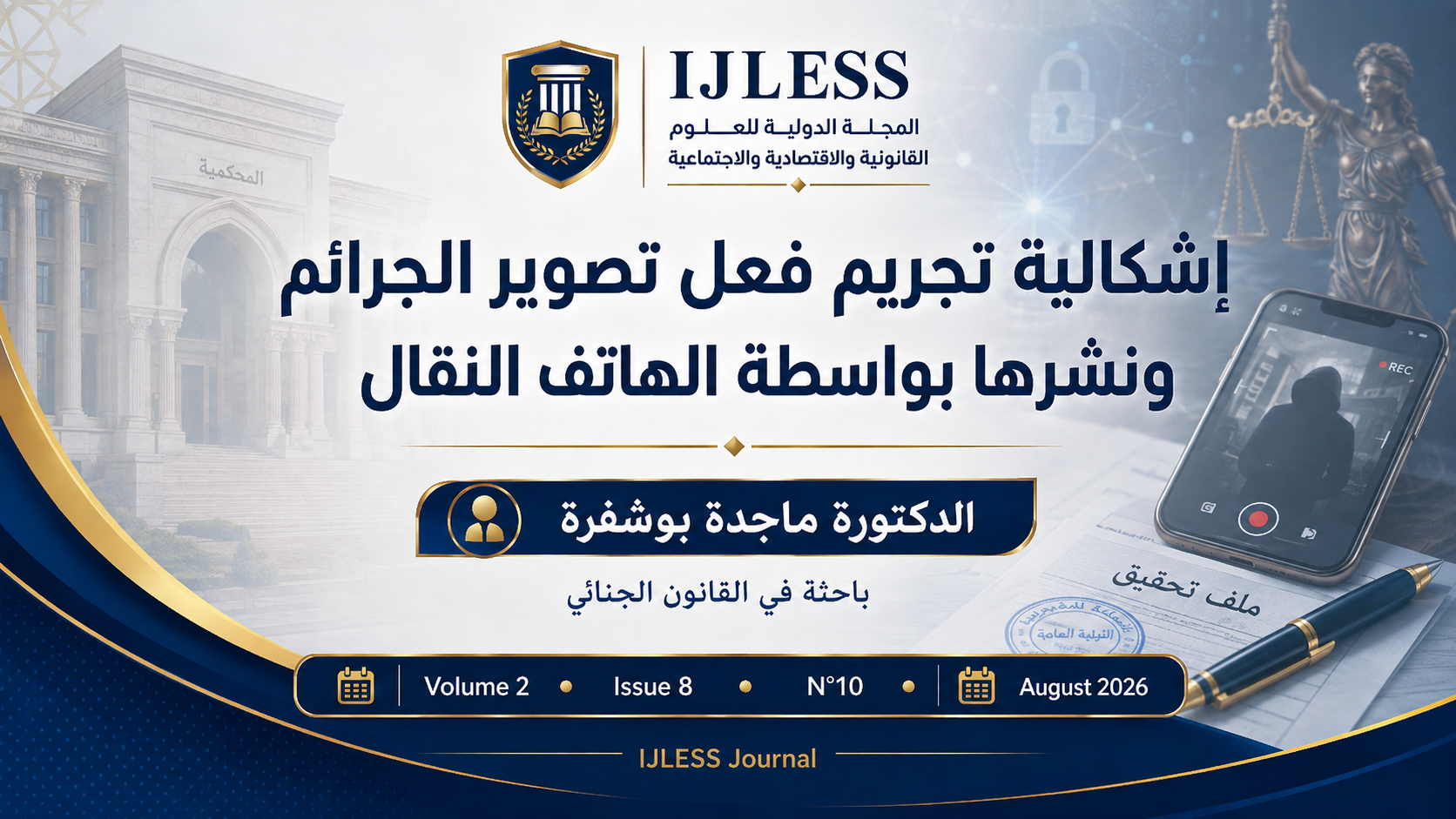
إشكالية تجريم فعل تصوير الجرائم ونشرها بواسطة الهاتف النقال في القانون المغربي والمقارن
The issue of criminalizing the recording and dissemination of crimes via mobile phones under Moroccan and comparative law
الدكتورة : ماجدة بوشفرة | دكتورة في القانون الخاص، كلية العلوم القانونية والاقتصادية والاجتماعية، جامعة سيدي محمد بن عبد الله- فاس
معلومات البحث
المجلة: المجلة الدولية للعلوم القانونية والاقتصادية والاجتماعية (IJLESS)
Journal: International Journal of Legal, Economic, and Social Sciences
Volume: 2 Issue: 8 N°: 10
Publication: August 2026
Pages: 126–134
ISSN: 3119-6411
Language: ar
الملخص
أفرز التطور الاجتماعي وانتشار الهواتف الذكية وسرعة الاتصال عبر الإنترنت ظهور سلوك جديد يتمثل في تصوير الجرائم أثناء وقوعها ونشرها على منصات التواصل الاجتماعي لأغراض مختلفة مثل التسلية أو الابتزاز أو التهديد. وبالرغم من أن الاعتداء على الأشخاص أو عرضهم يعد جريمة معروفة، فإن تصوير هذا الاعتداء أو نشره لا يخضع عادة لنموذج إجرامي خاص في معظم القوانين التقليدية. وقد حاول الفقه والقضاء تكييف هذه الأفعال ضمن القواعد الجنائية القائمة مثل المشاركة في الجريمة، الامتناع عن تقديم المساعدة، الاعتداء على الحق في الصورة أو التشهير، لكن هذه المحاولات غالبًا ما تبقى محدودة وغير كافية لتغطية كل صور هذا السلوك الرقمي المستحدث. ونظرًا لخطورة هذه الأفعال، تبرز الحاجة إلى تدخل تشريعي خاص يضع عقوبة واضحة ورادعة، على غرار التجربة الفرنسية، لضمان محاصرة الظاهرة وحماية المجتمع والضحايا من آثارها السلبية.
Abstract
The social development and the widespread use of smartphones, along with the rapid spread of internet connectivity, have given rise to a new behavior consisting of recording crimes as they occur and publishing them on social media platforms for various purposes, such as amusement, blackmail, or intimidation. Although assault on individuals or their dignity constitutes a recognized crime, recording or disseminating such assaults is generally not covered by a specific criminal provision in most traditional legal systems. Scholars and courts have attempted to adapt these acts within existing criminal rules, such as complicity in the crime, failure to provide assistance, violation of the right to one’s image, or defamation; however, these approaches often remain limited and insufficient to cover all forms of this emerging digital behavior. Given the inherent risks of these acts, there is a clear need for specific legislative intervention establishing explicit and deterrent penalties, following the French model, to effectively curb the phenomenon and protect societyand victims from its harmful effects.
Citation | طريقة الاستشهاد
APA
ماجدة بوشفرة (2026). إشكالية تجريم فعل تصوير الجرائم ونشرها بواسطة الهاتف النقال في القانون المغربي والمقارن. المجلة الدولية للعلوم القانونية والاقتصادية والاجتماعية (IJLESS)، 2(8), 126–134.
English Citation
ماجدة بوشفرة (2026). The issue of criminalizing the recording and dissemination of crimes via mobile phones under Moroccan and comparative law. International Journal of Legal, Economic, and Social Sciences (IJLESS), 2(8), 126–134.
DOI
في انتظار التخصيص — 10.63585/00000