
أزمة الشرعية والفعالية في مجلس الأمن الدولي: دراسة في الأسباب البنيوية ومسارات الإصلاح
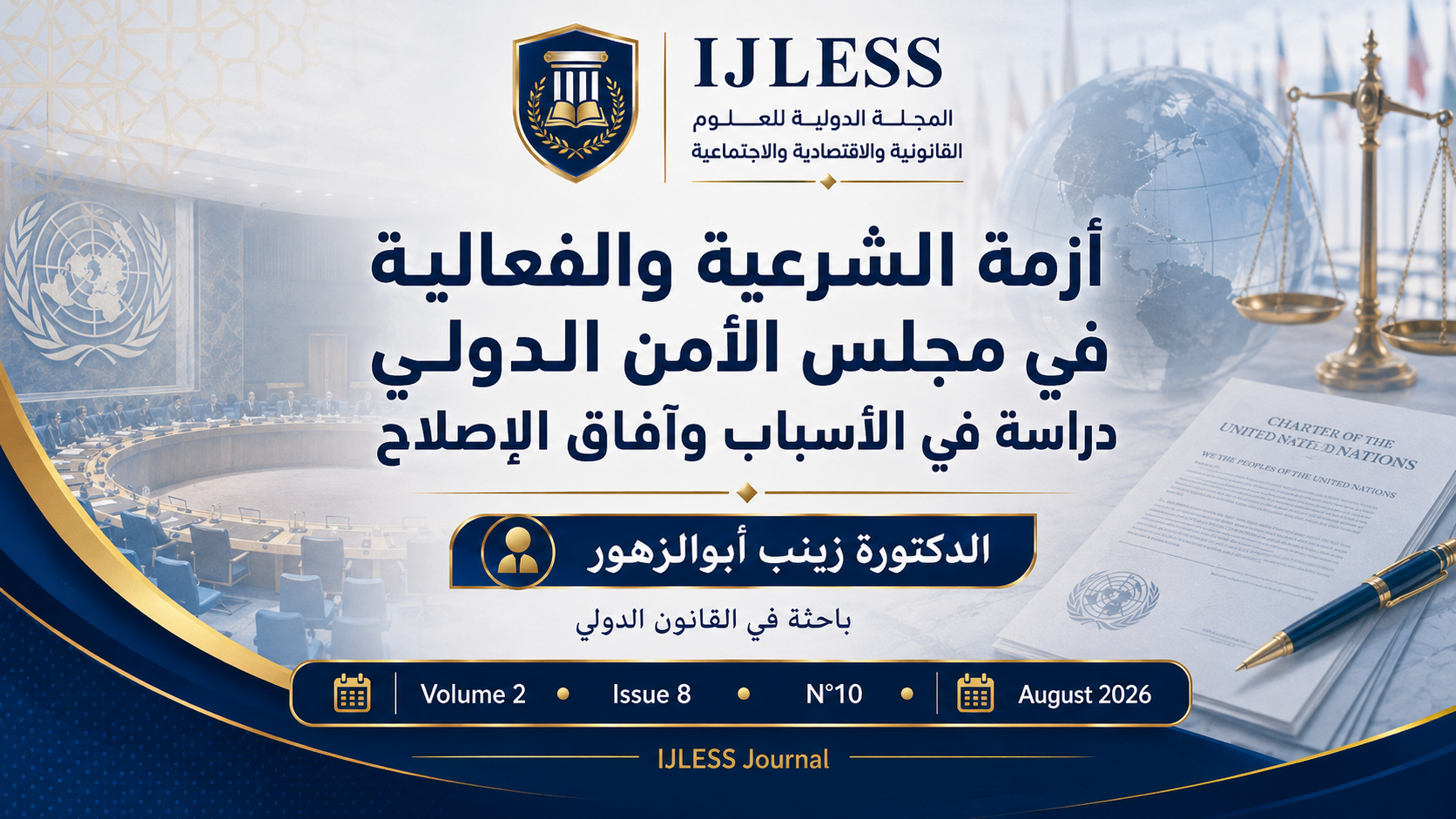
أزمة الشرعية والفعالية في مجلس الأمن الدولي: دراسة في الأسباب البنيوية ومسارات الإصلاح
The Crisis of Legitimacy and Effectiveness in the United Nations Security Council: A Legal Study of Structural Causes and Reform Pathways
الدكتورة : زينب أبوالزهور | باحثة في القانون الدولي العام
معلومات البحث
المجلة: المجلة الدولية للعلوم القانونية والاقتصادية والاجتماعية (IJLESS)
Journal: International Journal of Legal, Economic, and Social Sciences
Volume: 2 Issue: 8 N°: 10
Publication: August 2026
Pages: 135–145
ISSN: 3119-6411
Language: ar
الملخص
يتناول هذا المقال إشكالية عجز مجلس الأمن الدولي عن تسوية النزاعات المعاصرة، وأثر ذلك على شرعيته وفاعليته ضمن النظام الدولي. وينطلق البحث من فرضية مفادها أن هذا العجز يعكس أزمة بنيوية مرتبطة بالتسوية السياسية التي قام عليها الميثاق عام 1945، وليس مجرد اختلال ظرفي مرتبط بسياق بعينه، وأن معالجته تستلزم الجمع بين مسارات إصلاح تدريجية وأخرى أكثر شمولا. ويعتمد البحث منهج التحليل القانوني النقدي، مدعما بالمنهجين التاريخي والمقارن، من أجل تحديد الأساس القانوني لحق النقض وتتبع تطور ممارسته، ورصد مظاهر هذا العجز في نزاعات فلسطين وأوكرانيا وليبيا والعراق، قبل استعراض مسارات الإصلاح المطروحة، من مبادرة UN80 الإدارية إلى الالتزامات الواردة في ميثاق المستقبل. ويخلص البحث إلى أن الأمم المتحدة تظل مؤسسة قائمة رغم عجزها البنيوي، وأن مستقبل شرعيتها مرتبط بقدرة الدول الأعضاء على تفعيل مسارات إصلاح توازن بين مقتضيات الفعالية ومبدأ المساواة السيادية بين الدول.
Abstract
This article examines the incapacity of the United Nations Security Council to resolve contemporary international disputes and its effect on the legitimacy and effectiveness of the United Nations within the international system. The study proceeds from the hypothesis that this incapacity reflects a structural crisis linked to the political settlement underlying the 1945 Charter, rather than a circumstantial dysfunction confined to a specific context, and that addressing it requires combining incremental reform with more comprehensive measures. Employing a critical legal-analytical method supported by historical and comparative approaches, the study identifies the legal basis of the veto, traces the evolution of its practice, and examines manifestations of this incapacity in the disputes over Palestine, Ukraine, Libya, and Iraq, before reviewing proposed reform pathways, from the administrative UN80 initiative to the commitments enshrined in the Pact for the Future. The study concludes that the United Nations remains a standing institution despite its structural incapacity, and that the future of its legitimacy depends on the ability of Member States to activate reform pathways that balance the requirements of effectiveness with the principle of sovereign equality among States.
Keywords
Security Council; Veto; United Nations Reform; International Legitimacy; Collective Security; Pact for the Future; UN80 Initiative.
Citation | طريقة الاستشهاد
APA
زينب أبوالزهور (2026). أزمة الشرعية والفعالية في مجلس الأمن الدولي: دراسة في الأسباب البنيوية ومسارات الإصلاح. المجلة الدولية للعلوم القانونية والاقتصادية والاجتماعية (IJLESS)، 2(8), 135–145.
English Citation
زينب أبوالزهور (2026). The Crisis of Legitimacy and Effectiveness in the United Nations Security Council: A Legal Study of Structural Causes and Reform Pathways. International Journal of Legal, Economic, and Social Sciences (IJLESS), 2(8), 135–145.
DOI
في انتظار التخصيص — 10.63585/00000